

Introduction
Stepping into the legal system can feel overwhelming, especially when you are dealing with a stressful issue for the first time. Whether it is a property dispute, a family disagreement, or a business contract problem, finding the right legal guidance is a major step. Many people feel unsure about where to begin, how to speak with an advocate, or what to expect once the process starts. Before making a final choice, it is completely normal to have questions about a lawyer’s background, fees, communication style, and the steps involved in handling a case. Asking these questions early helps you understand your options and sets clear expectations. Platforms like WakilSahab make it easier for people across India to explore available lawyers, read legal blogs, and find helpful resources to navigate their legal journeys with confidence.
Why People Should Ask Questions Before Hiring a Lawyer
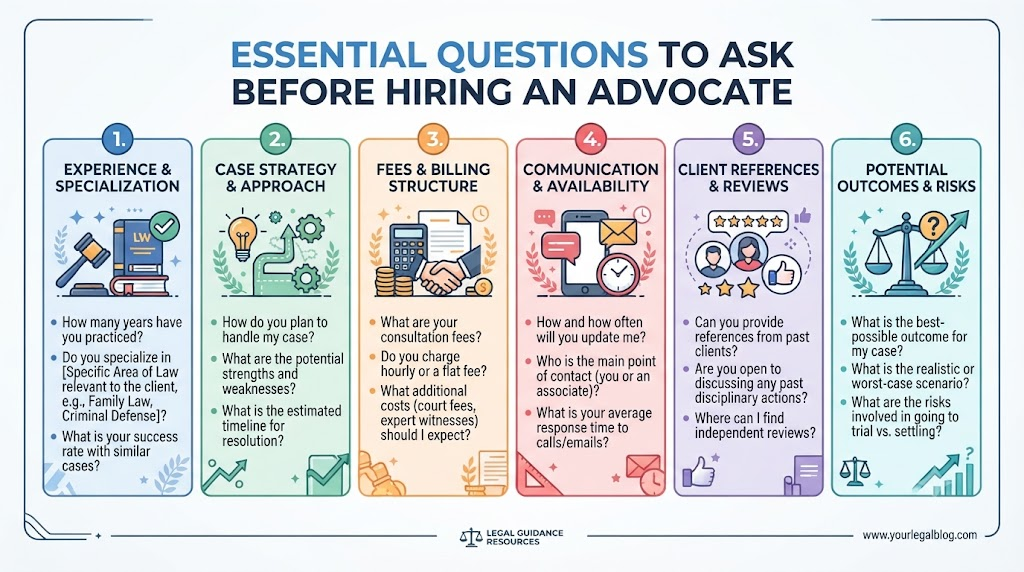
Many people hesitate to ask questions because they feel intimidated by advocates or worried about asking the wrong thing. However, an initial consultation is meant to be a two-way conversation. Asking questions helps you understand whether the lawyer handles your specific kind of legal matter, how they manage their workload, and what you need to provide to help your case.
Asking questions does not guarantee a specific legal result, but it gives you clarity. It helps you build a transparent relationship with your advocate from day one, ensuring that both of you are on the same page regarding goals, documents, and timelines.
Does the Lawyer Handle My Type of Legal Matter?
The very first thing to check is whether the lawyer regularly handles cases similar to yours. Law is a vast field, and advocates often focus on specific areas rather than practicing everything.
Common legal areas include:
- Family law matters like divorce, child custody, or maintenance.
- Criminal defense and related legal proceedings.
- Property disputes, tenant issues, and land agreements.
- Civil matters, money recovery, and contract disputes.
- Corporate law, startup compliance, and partnership agreements.
- Tax law, cyber crime, immigration, and intellectual property.
WakilSahab lists several practice areas, including criminal, family, property, corporate, civil, tax, immigration, cyber crime, and intellectual property-related categories. You should always confirm that the advocate you are considering has hands-on experience in the specific branch of law that applies to your situation.
How Much Experience Do You Have With Similar Matters?
Total years of practice matter, but relevant experience is often much more important. A lawyer who has spent ten years handling corporate contracts may not be the best fit for a complicated family property dispute.
You can ask an advocate how many similar cases they have managed in the past and what kind of outcomes or challenges they typically encounter in those matters. Keep in mind that experience helps a lawyer understand procedures better, but no advocate can guarantee a specific court result or timeline.
What Are Your Qualifications and Professional Details?
Before handing over your documents and paying a fee, it is wise to check basic professional credentials. You can look into where the lawyer completed their legal education, how long they have been enrolled with the relevant bar council, and their general practice background.
Verifying these details ensures that you are working with a qualified professional. Avoid working with anyone who cannot clearly share their professional registration details or office location.
How Much Will a Lawyer Charge?
Money is often one of the biggest concerns when seeking legal help. It is completely appropriate to ask about fee structures during your first meeting.
Lawyers may use different billing methods depending on the nature of the work:
- Consultation fees: Charged for the initial sitting or advice session.
- Fixed fees: A set amount agreed upon for a specific task, such as drafting a legal notice or reviewing an agreement.
- Stage-wise or case-related fees: Payments divided according to different steps of court proceedings.
- Additional expenses: Costs related to court filing stamps, photocopies, expert opinions, or travel.
Fees vary widely depending on the complexity of the matter, the lawyer’s experience, and the city where the case is being fought. Avoid assuming that the cheapest option is the best one, as quality legal work requires time and careful attention.
What Is Included in the Legal Fee?
Knowing the price is only part of the picture; you also need to know what services are covered by that price. Ask whether the quoted amount includes drafting documents, court appearances, secretarial work, typing, or sending legal notices.
If extra hearings take place or if the matter goes to a higher forum, will there be additional charges? Having a clear conversation about these points helps prevent misunderstandings later.
What Documents Should I Bring or Share?
A lawyer relies heavily on facts and records to understand your situation. During your initial discussion, ask what documents you need to collect and bring along.
Depending on your case, these might include:
- Agreements, contracts, or lease deeds.
- Legal notices received or sent previously.
- Identity proofs or correspondence letters.
- Property papers, mutation records, or bank statements.
- Court papers or police complaints if any have already been filed.
Never hide important facts or documents from your advocate. Being completely honest allows your lawyer to prepare properly and anticipate arguments from the other side.
How Long Could My Legal Matter Take?
Everyone wants to know how fast their legal issue will be resolved. However, legal timelines in India depend on many factors outside anyone’s direct control, including court schedules, the responsiveness of the opposing party, procedural requirements, and document verification.
While a lawyer cannot promise an exact completion date, they can give you a general estimate based on similar matters they have handled in the past. Be cautious of any advocate who promises a fast or guaranteed timeline.
Will I Need to Go to Court?
Not every legal dispute ends up inside a courtroom. Many issues are resolved through written notices, mutual negotiations, settlement talks, mediation, or arbitration before reaching a trial stage.
Your lawyer will evaluate your facts and tell you whether court proceedings appear necessary or if an out-of-court settlement is possible. The approach depends entirely on the specific facts of your case.
Who Will Handle My Legal Matter?
In larger law offices or senior advocate chambers, juniors or associates may assist with drafting and research, while the senior advocate argues the matter in court. It is helpful to ask who your primary point of contact will be.
Knowing who is working on your file ensures that you direct your questions to the right person and know who will be present during meetings or hearings.
How Will the Lawyer Keep Me Updated?
Communication is vital for a smooth client-lawyer relationship. Before you hire someone, discuss how updates will be shared.
- How do they prefer to communicate—phone calls, emails, or messaging apps?
- How often will you receive status updates on your matter?
- How will you be informed about upcoming court dates or urgent document submissions?
While advocates are often busy in courtrooms and may not answer calls instantly, establishing a clear communication routine helps manage expectations on both sides.
Can I Speak With the Lawyer Before Hiring Them?
An initial consultation lets you talk through your problem and evaluate whether the lawyer is someone you feel comfortable working with. Use this time to explain your situation clearly, listen to their initial assessment, and ask any questions you have about their working style.
Keep in mind that consultation fees and policies vary from one advocate to another; some charge for the first meeting while others do not. Always confirm these terms beforehand.
What Should I Tell the Lawyer During the First Meeting?
During your first meeting, you should provide a clear, chronological summary of what happened. Share important dates, names of involved parties, copies of notices, and any previous legal actions taken.
Do not leave out details that you think might make you look bad. Your lawyer needs the unvarnished truth to defend or represent you effectively. Remember that client-lawyer confidentiality protects the discussions you share with your legal counsel.
Can I Ask for a Second Opinion?
If you are facing a major legal decision and feel unsure about the advice you received, getting a second opinion is completely acceptable. Consulting another advocate can give you a different perspective or help you understand alternative ways to handle your matter.
Getting a second opinion does not mean your first lawyer was wrong; it simply helps you make a well-informed choice before moving forward.
Related resources you may find helpful
| No. | Suggested Sentence | Anchor Text | Target Page/URL | Why This Link Is Useful |
| 1 | If you want to explore different advocates across various cities, you can browse through the lawyer directory to find suitable professionals. | lawyer directory | https://wakilsahab.in/lawyers | Helps users discover and browse verified lawyer listings across different practice areas and locations in India. |
| 2 | To read more about specific legal branches and understand their procedures, check out the practice areas section. | practice areas | https://wakilsahab.in/practice-areas | Guides readers through specialized legal categories like civil, criminal, family, and property law. |
| 3 | You can also read community discussions and ask questions on the legal forum to learn from common experiences. | legal forum | https://wakilsahab.in/forum | Allows users to engage with peers and legal professionals to discuss everyday legal doubts. |
| 4 | Stay updated on recent judgments and legal developments by browsing the latest posts on the legal blog. | legal blog | https://wakilsahab.in/blog | Offers informative articles and educational content written for ordinary citizens navigating Indian law. |
How Do I Know If a Lawyer Is Suitable for Me?
Choosing an advocate is a personal decision that requires balancing several factors. Look at whether the lawyer has relevant experience in your specific legal area, communicates clearly without using confusing jargon, explains the procedural steps honestly, and maintains transparent fee policies.
Trust your instincts. A good lawyer will listen patiently, answer your questions directly, and help you understand your legal standing without making unrealistic promises.
Can I Find Lawyers Online in India?
Online legal directories and platforms have made it much simpler to discover advocates across different cities and practice areas. Instead of relying solely on word-of-mouth recommendations, you can search for legal professionals based on location, court practice, and specialization.
WakilSahab provides lawyer discovery across India and presents lawyer listings by practice area and city. However, even when finding a professional online, you should still verify their credentials, discuss your matter in person or over a call, and review their terms before committing.
Questions About Legal Aid in India
Not everyone can afford private lawyer fees. For individuals who meet specific financial and social criteria, the Indian legal system provides provisions for free legal services.
The National Legal Services Authority states that free legal aid is available to eligible people under the Legal Services Authorities Act, 1987, and may include legal advice and representation. Eligible categories often include women, children, persons with disabilities, industrial workmen, and individuals belonging to Scheduled Castes or Scheduled Tribes whose annual income falls below prescribed limits. You can approach local district legal services authorities to check your eligibility.
Common Mistakes to Avoid Before Hiring a Lawyer
- Choosing solely based on the lowest fee: Hiring the cheapest advocate without checking their experience or suitability can lead to poor handling of your case.
- Hiring the first lawyer you find: Taking no time to compare or consult can result in an awkward working relationship.
- Hiding important facts: Concealing inconvenient details from your lawyer damages your own case.
- Expecting guaranteed outcomes: No ethical lawyer will promise a 100% win in court because judicial outcomes depend on facts and evidence.
- Failing to clarify fee terms: Agreeing to work without discussing expenses and payment stages upfront often creates disputes later.
What a Good First Conversation With a Lawyer Should Cover
A productive initial consultation generally covers:
- A summary of the facts and events leading to the dispute.
- Review of any notices, agreements, or court papers you brought along.
- An assessment of your legal position and potential challenges.
- Discussion of possible paths forward, including negotiation or court action.
- Clear agreement on fees, payment schedules, and communication channels.
Frequently Asked Questions
- What are the most important questions to ask before hiring a lawyer?You should ask about their experience with similar cases, their fee structure, what services are included, how they communicate updates, and what documents you need to provide.
- How can I check a lawyer’s experience?You can ask about the number of similar matters they have handled, their years of practice in relevant courts, and their familiarity with specific legal procedures.
- Do all lawyers charge the same consultation fee?No. Consultation fees vary based on the lawyer’s experience, location, and the complexity of your legal issue. Some advocates charge per sitting, while others offer a fixed rate.
- What documents should I prepare before meeting a lawyer?Bring all relevant agreements, notices, correspondence, identity proofs, and any previous court papers related to your matter. Keep your own copies safe as well.
- Is a second opinion useful when dealing with a legal dispute?Yes. If you face a major decision and feel uncertain, consulting another advocate can give you an alternative perspective and help you make a confident choice.
- Can I find verified lawyers online in India?Yes, platforms like WakilSahab allow users to explore lawyer profiles, practice areas, and city-wise listings to connect with legal professionals easily.
- Does lawyer location matter for my case?Location is often important because advocates practicing in the local courts where your matter is registered will be more familiar with local court procedures and officials.
- How do I verify a lawyer’s practice area?You can check their professional profile, discuss their past casework during your initial consultation, and confirm whether they regularly handle matters in that specific branch of law.
- Is free legal aid available for everyone in India?No. Free legal aid under the Legal Services Authorities Act is available only to eligible individuals, such as women, children, and people meeting specific income criteria.
- How should I compare multiple lawyers before making a decision?Compare their relevant experience, clarity of communication, transparency regarding fees, professional approach, and how comfortable you feel discussing your matter with them.
Conclusion
Hiring a lawyer is a crucial decision that can significantly impact the resolution of your legal matter. By asking the right questions about experience, fees, communication, and document requirements, you can approach the process with clarity and confidence. Take your time to understand your options, check professional backgrounds, and ensure you feel comfortable with your legal counsel.
WakilSahab helps people across India explore lawyers, read legal information, and access helpful resources for their legal needs. Explore WakilSahab today to find trusted legal guidance and make informed decisions for your future.