

Introduction
Modern software teams face heavy pressure to release code faster than ever before. Traditional IT operations often slow down deployments because manual server setups, custom scripts, and ticket queues take too much time. Companies now look toward modern delivery models to remove these operational bottlenecks. This shift leads many tech leaders to explore what is NoOps and how automated systems change software delivery.
NoOps means “No Operations.” It does not mean that server maintenance or cloud infrastructure management disappears completely from an organization. Instead, it means that standard operational tasks run entirely through automated systems, cloud platforms, and smart software. Developers push code, and automated pipelines handle testing, security checks, resource scaling, and deployment without human intervention. This approach helps teams move faster, reduce human errors, and focus on building great products for their users.
Understanding the Core Concepts of NoOps
To understand NoOps fully, you must look at how modern cloud infrastructure works behind the scenes. Traditional operations require system administrators to manually configure virtual machines, manage network switches, and patch operating systems. NoOps replaces these manual duties with code and APIs. Cloud platforms provide raw computing power on demand, while automation software configures everything automatically.
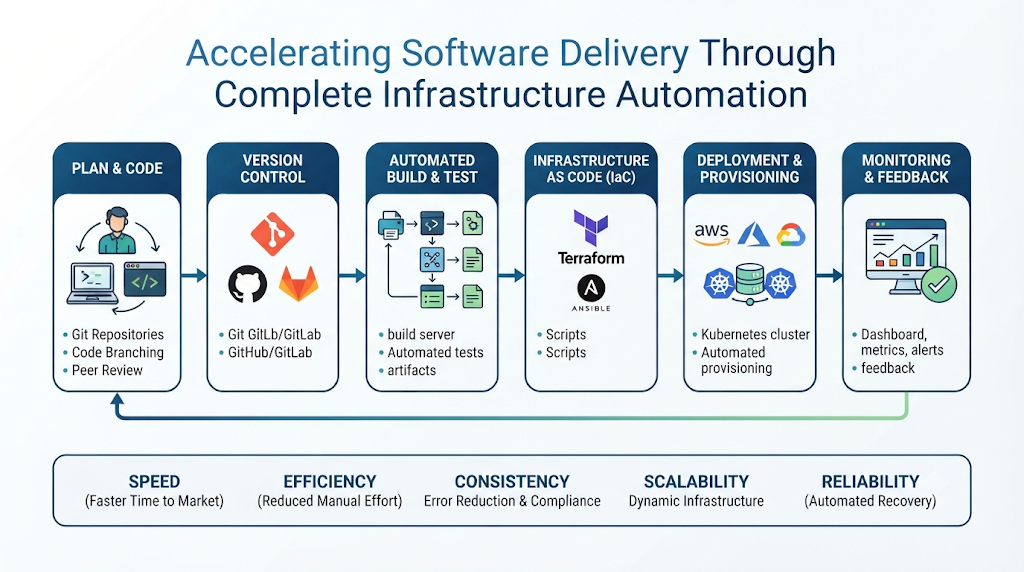
Infrastructure as Code plays a central role in this transformation. Engineers write configuration files that describe servers, networks, and databases using readable text. Tools read these files and build the exact environment required in minutes. Because the configuration lives in version control systems, teams can track changes, test updates, and roll back errors easily. This eliminates the guesswork that often causes downtime during major system updates.
Automation also extends into software delivery pipelines. Developers write code, commit it to a repository, and trigger automated builds. The system runs unit tests, scans for security vulnerabilities, builds containers, and pushes the application to production environments. Engineers do not need to manually approve routine releases or log into remote servers to run deployment scripts.
NoOps vs DevOps: What Is the Difference?
Many IT professionals confuse NoOps with DevOps, but both approaches serve different purposes in software engineering. DevOps bridges the gap between software developers and operations teams. It encourages collaboration, shared responsibility, and continuous delivery while keeping operations engineers actively involved in monitoring and maintaining infrastructure.
By contrast, NoOps takes automation to the highest possible level. It removes the traditional operations team from day-to-day manual tasks entirely. While DevOps focuses on collaboration and workflow improvement, NoOps focuses on eliminating manual toil through complete automation.
| Comparison Feature | DevOps Approach | NoOps Approach |
|---|---|---|
| Primary Focus | Collaboration between dev and ops teams | Complete automation of operational tasks |
| Infrastructure Management | Managed by dedicated operations or platform engineers | Managed via automated code, APIs, and cloud services |
| Deployment Workflow | Automated pipelines with manual approvals for critical steps | Fully automated pipelines from code commit to production |
| Team Structure | Specialized development and operations roles working together | Cross-functional product teams relying on self-service platforms |
Organizations often adopt DevOps first to build a collaborative culture and set up automation pipelines. Once their infrastructure matures and becomes stable, they can adopt NoOps practices for routine workloads and standard deployments. This evolutionary path allows teams to scale operations without constantly growing their administrative headcount.
Essential NoOps Automation Tools
Building a reliable automated environment requires the right set of technologies. Modern teams rely on a growing ecosystem of NoOps automation tools to provision infrastructure, manage containers, and monitor system health.
Terraform stands out as a leading infrastructure provisioning tool. It allows teams to define cloud resources across different providers using declarative configuration files. Kubernetes helps manage containerized applications by automating deployment, scaling, and load balancing across clusters. GitOps tools use Git repositories as the single source of truth for declarative infrastructure and application deployments.
Container engines like Docker package applications and their dependencies into standardized units that run reliably on any environment. Monitoring platforms collect logs and metrics automatically, alerting teams only when unusual patterns or critical system failures occur. These tools work together to create a smooth, self-sustaining ecosystem where applications run with minimal human intervention.
The Role of AI and Self-Healing Systems
As cloud environments grow larger, human operators struggle to monitor every single metric manually. Modern automation now incorporates artificial intelligence and machine learning to manage complex systems safely. AIOps platforms analyze operational data in real-time, detect anomalies, and predict potential failures before they impact users.
Self-healing infrastructure represents a major milestone in modern IT operations. When a server crashes or a container becomes unresponsive, automated monitoring systems detect the failure instantly. Instead of paging an on-call engineer at midnight, the system replaces the faulty resource automatically, restores network traffic, and logs the incident for later review.
AI-powered operations also help optimize cloud spending. Automated tools analyze resource utilization patterns and scale computing power up or down dynamically. This ensures that applications always have enough resources during peak hours while saving money during quiet periods.
Career Paths and Skill Development in Modern IT
The shift toward automated environments changes what employers look for in technical professionals. Traditional system administrators must adapt their skills to stay relevant in a cloud-first job market. Learning modern automation practices opens up exciting career opportunities across the technology sector.
Professionals wanting to validate their expertise often pursue structured learning programs. Enrolling in a comprehensive NoOps training course helps engineers understand cloud architecture, infrastructure as code, and automated delivery pipelines. These programs teach students how to design resilient systems that require little to no manual oversight.
For specialized technical leaders, pursuing a recognized NoOps certification demonstrates advanced knowledge in cloud automation. Professionals who design large-scale automated environments benefit from advanced NoOps architect training, which covers enterprise cloud patterns, security automation, and governance. Meanwhile, technical managers who oversee automated teams can benefit from specialized learning paths designed for leadership roles.
| Career Role | Core Responsibilities | Key Skills Needed |
|---|---|---|
| Automation Engineer | Build and maintain CI/CD pipelines and provisioning scripts | Scripting, CI/CD tools, Git, cloud basics |
| Platform Engineer | Design internal developer platforms and self-service portals | Kubernetes, Terraform, API design, system architecture |
| Cloud Architect | Design scalable, secure, and resilient cloud-native systems | Enterprise cloud design, security, cost optimization |
| Operations Manager | Lead teams transitioning toward automated workflows | Agile methodologies, process redesign, team leadership |
Team leaders and project managers who want to guide their organizations through digital transformations often pursue a dedicated NoOps manager certification. This credential helps leaders understand how automation impacts team structure, operational efficiency, and business outcomes.
Business Adoption and Professional Services
Many organizations want to adopt cloud automation but lack the internal expertise to redesign their workflows. Migrating from legacy data centers to fully automated cloud environments requires careful planning, risk assessment, and technical execution.
When internal teams face complex cloud migrations, businesses often look outward for specialized expertise. Engaging external NoOps consulting services helps companies evaluate their readiness, design robust automation strategies, and implement secure cloud infrastructure correctly from the start. Consultants help identify bottlenecks, recommend the right tools, and train internal staff on modern best practices.
Finding the right talent for short-term automation projects can also be challenging for growing businesses. Organizations frequently hire NoOps freelancers to build custom deployment pipelines, set up infrastructure monitoring, or troubleshoot complex Kubernetes clusters. Bringing in experienced independent specialists allows companies to accelerate their automation projects without committing to permanent full-time hiring right away.
Platforms like NoOpsSchool provide valuable guidance, professional training resources, and consulting connections for organizations and individuals navigating this technological shift. Whether an engineer wants to learn modern automation tools or a business wants to optimize its cloud delivery pipelines, structured education and expert support make the journey much smoother.
Frequently Asked Questions
What does NoOps mean in cloud computing? NoOps stands for No Operations, a model where routine infrastructure management and software deployments run entirely through automation and cloud services. It removes manual tasks like server provisioning and ticket queues so teams can release software faster.
Does NoOps mean human IT workers are no longer needed? No, NoOps does not eliminate human jobs. While routine operational tasks become automated, human professionals are still required for system architecture, security governance, complex troubleshooting, and strategic business planning.
How is NoOps different from DevOps? DevOps focuses on improving collaboration between development and operations teams while using automation to assist workflows. NoOps takes automation further by removing the traditional operations team from day-to-day manual deployment tasks entirely.
What skills are needed to become a NoOps engineer? Engineers need strong knowledge of cloud computing platforms, infrastructure as code tools like Terraform, container management systems like Kubernetes, and automated CI/CD pipeline configuration.
What tools are commonly used in NoOps environments? Common tools include Terraform for provisioning, Kubernetes for container orchestration, Docker for packaging applications, Git for version control, and various cloud-native monitoring and observability platforms.
How does infrastructure as code support NoOps? Infrastructure as code allows engineers to define servers and networks using readable text configuration files. Automated tools read these files to build environments consistently, eliminating manual configuration errors.
What are the main benefits of adopting NoOps? Key benefits include faster software delivery cycles, reduced human error during deployments, lower operational overhead, improved system reliability, and better scalability for growing businesses.
Can small businesses adopt NoOps practices? Yes, small businesses can adopt NoOps by utilizing managed cloud services and pre-built automation pipelines. This allows small teams to manage complex infrastructure without hiring a large dedicated operations staff.
What is the role of AI in modern IT operations? AI helps analyze large amounts of operational data, detect system anomalies in real-time, predict potential failures, and trigger automated self-healing responses before users experience downtime.
How can professionals start learning about NoOps? Professionals can start by studying cloud fundamentals, learning infrastructure as code, exploring containerization, and taking structured training courses focused on modern IT automation practices.
Conclusion
Modern software delivery requires speed, reliability, and continuous innovation. Traditional manual operations no longer satisfy the demands of fast-moving digital markets. By embracing automation, infrastructure as code, and cloud-native tools, organizations can build resilient systems that scale effortlessly.
While NoOps does not replace human ingenuity and oversight, it removes repetitive manual labor so engineering teams can focus on creating value. Organizations and professionals looking to stay ahead in the tech industry can rely on structured education, modern tools, and guidance from specialized platforms like NoOpsSchool to build a successful future in automated IT operations.