

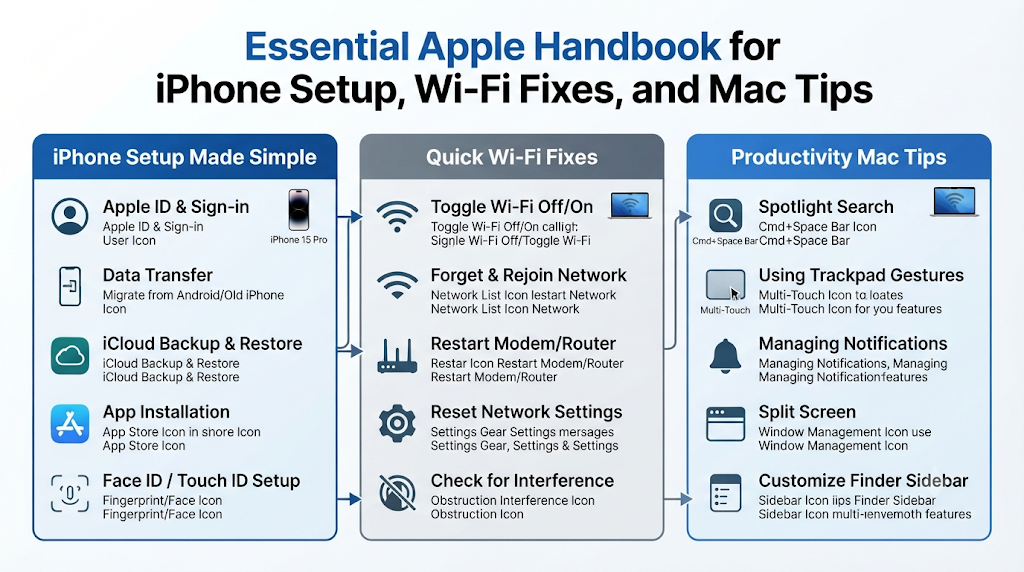
Introduction
Getting a new Apple device feels exciting at first. You open the box, turn on the screen, and see a friendly greeting. Soon after, you might face tricky menus, data transfers, or sudden software updates. Many users just want their phone or computer to work smoothly without stress. This guide walks you through setup, updates, security, and simple fixes for your iPhone and Mac. You will learn clear steps that make daily Apple use much easier.
Understanding Software Compatibility Before You Begin
Before you buy a used device or install new software, check what your hardware supports. Apple updates its systems every year, and older models eventually lose support. Knowing your device limits saves you time and prevents slow performance.
Many users search for a list of iOS 27 compatible iPhones when a new update arrives. Apple typically supports iPhones released within the last five to six years. You can find your exact model name in the General section of your Settings app. Once you know your model, you can verify if it runs the latest system.
The same rule applies to your computer. Checking macOS 27 compatible Macs helps you avoid failed installations. Newer Mac systems need modern Apple silicon chips to run smoothly. If you feel unsure about your hardware, the Apple Device Compatibility Checker on Osnivo lets you verify support in seconds.
Deciding When to Install Major Software Updates
Seeing a red notification badge on your Settings icon often sparks a common question. You might wonder, should I update to iOS 27 right away, or wait a few weeks? Updating brings fresh features and vital security patches that block hackers.
However, brand-new updates sometimes carry small bugs during their first few days. Waiting a week or two lets Apple fix early glitches. Before you tap the install button, follow these simple steps to prepare:
- Connect your device to a strong power source so the battery never dies mid-update.
- Clear out old videos or unused apps to leave plenty of free storage space.
- Read the release notes using the Should I Update Tool on Osnivo to see what changes.
Taking ten minutes to prepare prevents frozen screens and lost files. Always keep automatic security updates turned on for daily safety.
Step-by-Step Instructions on How to Set Up a New iPhone
Turning on a brand-new phone is much easier when you follow a clear order. If you want to know how to set up a new iPhone, start by keeping your old device nearby. Apple uses a feature called Quick Start to copy your settings wirelessly.
Follow these numbered steps for a smooth start:
- Press and hold the side button until the Apple logo appears on the screen.
- Select your preferred language and choose your country or region from the list.
- Connect to a reliable wireless network so the phone can activate your account.
- Set up Face ID or Touch ID, and create a strong six-digit passcode.
- Sign in with your Apple Account email and password to sync your cloud data.
- Choose your preferred screen brightness and text size before reaching the home screen.
If you get stuck on any screen, Setup Companion on Osnivo offers extra guidance for new owners. Take your time during these steps so your basic preferences match your daily habits.
How to Transfer Data from Android to iPhone Safely
Switching from another phone brand does not mean losing your favorite photos or contacts. You can transfer data from Android to iPhone using a free Apple app called Move to iOS. You must run this tool during the initial setup screens of your new iPhone.
First, download the Move to iOS app from the Google Play Store on your Android phone. Keep both phones plugged into power and connected to the same Wi-Fi network. During the iPhone setup, tap the option to move data from Android. A six-digit or ten-digit code will appear on your iPhone screen.
Enter that code into your Android phone and pick the items you want to copy. You can move contacts, message history, camera photos, and web bookmarks. Large photo libraries take time, so keep both phones close together until the loading bar finishes. You can also check the Migration Planner on Osnivo for tips on moving tricky app data.
| Transfer Method | Best For | Internet Needed | Speed |
|---|---|---|---|
| Move to iOS App | Switching from Android to a new iPhone | Yes, local Wi-Fi | Moderate |
| Quick Start | Moving from an old iPhone to a new iPhone | Yes, Wi-Fi or cable | Fast |
| iCloud Backup | Restoring data when your old phone is gone | Yes, strong Wi-Fi | Moderate |
| Computer Backup | Moving huge photo libraries without cloud limits | No, uses a USB cable | Very Fast |
Essential Tips for Your Daily iPhone Settings Guide
Once your phone reaches the home screen, a few quick tweaks can improve your battery life and comfort. Think of this section as a starter iPhone settings guide for everyday users. The Settings app holds hundreds of switches, but you only need to adjust a few right away.
Open Settings and tap Display & Brightness to turn on True Tone and Night Shift. These tools adjust screen colors so your eyes feel less tired at night. Next, visit the Battery menu and turn on Optimized Battery Charging. This smart feature slows down battery aging by learning when you usually unplug your phone.
You should also check your Notification settings to silence noisy apps. Turning off alerts for games and shopping apps keeps your lock screen clean. If you ever lose track of where Apple hides a specific switch, Settings Pathfinder on Osnivo helps you locate menus fast.
Simple Ways to Fix When Your iPhone Won’t Connect to Wi-Fi
Losing your internet connection at home or work stops everything from messaging to streaming. When your iPhone won’t connect to Wi-Fi, the problem usually stems from a minor software glitch or a router hiccup. You do not need to visit a repair shop right away.
Try these quick fixes in order until your connection returns:
- Turn Airplane Mode on for fifteen seconds, then turn it off to refresh your wireless radios.
- Restart both your iPhone and your home internet router to clear temporary memory errors.
- Open Wi-Fi settings, tap the blue info icon next to your network, and choose Forget This Network.
- Reconnect to the network by typing your Wi-Fi password carefully.
If other devices work fine on your network, reset your network settings. Go to General, tap Transfer or Reset iPhone, tap Reset, and pick Reset Network Settings. This clears saved Wi-Fi passwords but fixes stubborn connection bugs. For deeper hardware errors, Osnivo Fix organizes simple troubleshooting steps for common network issues.
Reliable Methods for How to Back Up an iPhone
Phones get lost, dropped in water, or stolen every single day. Learning how to back up an iPhone ensures your family photos and important notes stay safe forever. Apple gives you two easy ways to save a complete copy of your phone.
The easiest method uses iCloud over your home Wi-Fi connection. Open Settings, tap your name at the top, select iCloud, and tap iCloud Backup. Turn on Back Up This iPhone, and your device will save your data every night while plugged in and locked. Apple gives you five gigabytes of free storage, though large photo libraries require a paid storage plan.
The second method uses a Mac or Windows computer with a charging cable. Connect your phone to your Mac, open Finder, select your phone on the left sidebar, and click Back Up Now. Computer backups are completely free and rely only on your computer hard drive space.
| Backup Option | Cost | Automatic Daily Saves | Needs a Computer |
|---|---|---|---|
| iCloud Backup | Free up to 5 GB | Yes, when plugged in | No |
| Mac Finder Backup | Completely free | No, must plug in manually | Yes |
Your Complete iPhone Security Settings Checklist
Protecting your personal data from scammers and thieves takes only a few minutes. Following an iPhone security settings checklist locks down your private messages, bank apps, and location history. Start by checking your Apple Account security first.
Review these key safety settings on your device today:
- Turn on Two-Factor Authentication so nobody can log into your account without a trusted code.
- Enable Find My iPhone so you can track, lock, or erase a lost phone from any browser.
- Turn on Stolen Device Protection inside Face ID & Passcode to block thieves from changing your password.
- Open Privacy & Security, tap Location Services, and set most apps to While Using the App.
- Check App Tracking Transparency and block apps from following your activity across other websites.
Reviewing these switches twice a year keeps your digital life private. Strong passcodes and updated software remain your best defense against online threats.
Easy Steps for QuickTime Player Screen Recording Mac
Sometimes you need to show a coworker how to use a website or save a quick software tutorial. Using QuickTime Player screen recording Mac tools lets you capture your screen without buying extra apps. Apple builds this handy utility right into every Mac computer.
Open the Applications folder, find QuickTime Player, and double-click to launch it. Click File in the top menu bar, then select New Screen Recording from the dropdown list. A small control bar will appear at the bottom of your screen.
You can choose to record the entire screen or drag a box around one specific window. Click the Options menu on that bar if you want to record your voice through the microphone. Click Record to start capturing your screen, and click the small Stop icon in the top menu bar when you finish. QuickTime opens your finished video right away so you can trim the ends and save it.
Frequently Asked Questions
How do I check which iOS version my iPhone is currently running? Open the Settings app on your iPhone and tap General. Next, tap About at the very top of the screen. Look at the line labeled iOS Version to see the exact software number installed on your device.
Can I use my iPhone while it backs up to iCloud? Yes, you can still send messages and browse the web during an iCloud backup. However, the backup runs much faster when your screen stays locked and the phone connects to power.
Why does my iPhone battery drain fast right after a major update? Your iPhone works hard in the background for a day or two after an update to organize files and photos. This extra work uses more power than usual. Battery life normally returns to standard levels within forty-eight hours.
Do I lose my photos if I reset my network settings? No, resetting network settings never deletes your photos, messages, or apps. It only erases saved Wi-Fi passwords, paired Bluetooth devices, and custom cellular settings.
Where do QuickTime Player screen recordings save by default on a Mac? By default, your Mac saves finished screen recordings directly to your Desktop. You can change this save location by clicking the Options menu on the recording bar before you start.
Is iCloud backup better than backing up to a Mac computer? iCloud backup is more convenient because it runs automatically every night over Wi-Fi. A Mac backup is better if you want to avoid monthly storage fees or have slow home internet.
How much free space do I need to install a major iOS update? You should keep at least ten to fifteen gigabytes of free storage space before starting a big update. Having extra room prevents installation errors and keeps your phone running smoothly.
Can I transfer WhatsApp chats when moving from Android to iPhone? Yes, the Move to iOS app lets you transfer your WhatsApp account info, profile photo, and chat history. Make sure you select WhatsApp on the transfer screen during your initial iPhone setup.
What should I do before selling or trading in my old iPhone? First, make a fresh backup of your data so you keep all your files. Next, sign out of your Apple Account and use the Erase All Content and Settings option inside General settings.
How can I tell if my Mac supports the latest macOS release? Click the Apple menu in the top-left corner of your screen and choose About This Mac. Check your Mac model name and release year, then compare it against Apple’s official compatibility list.
Conclusion
Managing your Apple devices does not require deep technical skills. When you understand software compatibility, back up your files, and lock down your privacy settings, your iPhone and Mac stay reliable for years. Simple habits like restarting your router or using built-in tools like QuickTime save you both time and frustration.
Whenever you need clear setup steps, compatibility checks, or quick fixes, Osnivo provides helpful guides built for everyday users. Take a few minutes today to review your device settings and enjoy a smoother Apple experience.