

Introduction
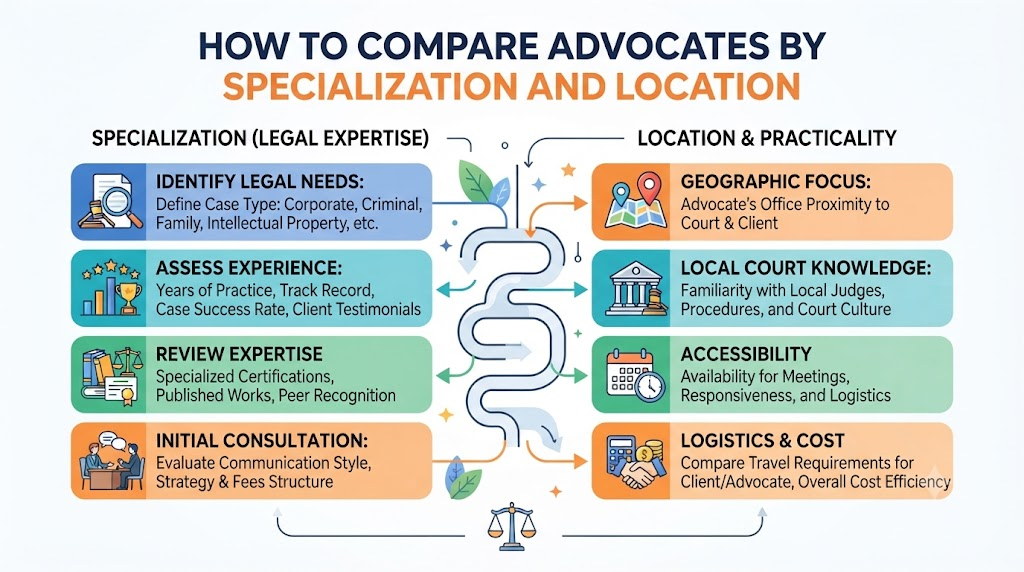
Finding the right advocate can feel like a stressful and confusing task, especially when you are dealing with a difficult legal issue for the very first time. You might wonder where to look, who to trust, and how to know if a particular person is the right fit for your situation. When searching for legal help, two of the most critical factors to keep in mind are legal specialization and location. An advocate who works mainly in criminal law may not be the best person to handle a complex property dispute. Similarly, an advocate located in another state may face challenges appearing in your local court or understanding local court procedures. Because every legal matter is unique, comparing several advocates before making a choice can help you find someone who truly understands your specific needs. Taking the time to check relevant details such as experience, communication style, and practice locations allows you to make an informed decision without feeling rushed.
Why Advocate Specialization Matters
The law is vast and covers many different branches. Just like a medical doctor often chooses to specialize in cardiology or pediatrics, advocates frequently focus their practice on specific areas of law. This focus allows them to develop a deeper understanding of the relevant rules, procedures, and types of cases within that field. When you look for an advocate by specialization, you are looking for someone who regularly handles matters similar to yours. Common areas of legal practice include family law, criminal law, property law, civil law, corporate law, employment law, consumer law, tax law, immigration law, and intellectual property law. This is only a general list because legal practice areas often overlap, and many advocates handle more than one type of case depending on their background and experience. It is important to remember that not every advocate works exclusively in a single area of law. Checking an advocate’s primary areas of practice helps ensure they have relevant background for your specific legal issue.
Why Location Matters When Choosing an Advocate
While specialization tells you what kind of cases an advocate handles, location tells you where they practice and where their office is situated. Location can play a practical and sometimes vital role in how your legal matter is managed. State and local laws can vary depending on the city, region, or jurisdiction. Furthermore, legal matters often require physical presence or filings in specific local courts or forums. Familiarity with the working style, scheduling, and local customs of a particular court can save valuable time during proceedings. Having an office nearby also makes it much easier to meet in person, review documents, discuss case updates, and handle urgent court filings. Proximity fosters better communication and makes scheduling face-to-face discussions convenient.
Location may not matter in the exact same way for every single legal issue. For instance, initial consultations or advisory work can sometimes happen online. However, for matters involving active court proceedings, having a local advocate is often practical and necessary.
How Specialization and Location Work Together
When searching for legal help, looking at only one factor is rarely enough. Specialization and location work hand in hand to determine the right professional for your case.
Imagine you find an advocate who has years of experience handling your exact type of property dispute, but their office is located in a different state hundreds of miles away. While their legal knowledge is valuable, their physical distance could make regular court appearances and local filings difficult. On the other hand, you might find an advocate whose office is just down the street, but their primary focus is corporate contracts when your issue involves a family law matter.
To find the right support, you should compare advocates by considering both where they practice and what areas of law they focus on. Balancing these two elements ensures that the person you choose is both legally equipped and practically accessible.
Common Types of Legal Specializations
Understanding what different legal specialists do can help you narrow down your search and identify the right professional category for your needs.
Family law advocates handle personal and domestic matters, including issues related to divorce, child custody, maintenance, adoption, and family property disputes. They focus on resolving sensitive personal matters with care and adherence to family laws. Criminal law advocates represent individuals or entities facing criminal accusations or investigations, handling police investigations, bail applications, trial proceedings, and defense strategies in criminal courts. Property law advocates focus on land, buildings, rental agreements, inheritance, title deeds, and boundary disputes, helping review documents, verify ownership, and resolve real estate conflicts.
Civil matters generally cover non-criminal disputes between individuals, businesses, or organizations, such as breach of contract, money recovery, debt disputes, and civil wrongs. Business and corporate law advocates work with businesses of all sizes, assisting with company formation, contract drafting, partnership agreements, regulatory compliance, and business dispute resolution. Consumer law advocates help individuals who have faced unfair trade practices, defective products, deficient services, or billing disputes, representing clients before consumer forums and commissions.
How to Check an Advocate’s Specialization and Location
Before you decide to work with someone, it is helpful to verify their professional focus and practice jurisdiction. To check an advocate’s specialization, you should look into their main area of legal work, the types of cases they have handled, their relevant practical experience, and the courts or forums where they usually appear. Reviewing professional information and confirming important details directly during an initial conversation ensures their expertise matches your requirements.
To check an advocate’s location, you should verify their city and state, whether they practice in the court where your matter will be heard, the accessibility of their office for document sharing, and their regular practice jurisdictions. Checking whether they offer online consultations for remote discussions can also help you avoid scheduling conflicts and travel issues later on.
Questions to Ask About Specialization and Location
When you speak with an advocate, asking direct questions helps clarify whether their skills and location fit your needs. You can ask whether they handle cases similar to yours, what area of law they mainly practice, how often they handle this type of legal matter, and which courts or forums they usually work in. It is also wise to ask who will personally handle your case, as senior advocates sometimes work alongside junior team members.
For location, you can ask if they practice in your city or state, whether they handle matters in the specific court involved, where their office is located, and how often you may need to visit. Asking about online meeting flexibility and whether there are local rules that may affect your legal matter ensures practical coordination throughout the process.
How to Compare Two or More Advocates
Comparing multiple advocates side by side helps you weigh your options objectively. Instead of rushing into a decision, you should look at a combination of factors including their area of law, relevant case experience, office and court location, communication style, availability for meetings, fee structure, services offered, and professional background. Choosing based on your unique legal needs and personal comfort rather than relying on a single isolated detail leads to a much better working relationship.
Simple Advocate Comparison Table
The following table serves as a practical tool to help you compare multiple advocates during your search:
| Factor | Advocate A | Advocate B | Advocate C |
| Area of law | Check details | Check details | Check details |
| Location | Check details | Check details | Check details |
| Relevant experience | Check details | Check details | Check details |
| Court experience | Check details | Check details | Check details |
| Communication | Compare | Compare | Compare |
| Fees | Ask directly | Ask directly | Ask directly |
| Availability | Check | Check | Check |
Related legal resources you may find helpful
| No. | Suggested Sentence | Anchor Text | Target Page/URL | Why This Link Is Useful |
| 1. | If you are trying to understand different legal branches, you can read more about how to find an advocate based on your specific needs. | find an advocate | https://wakilsahab.in/find-an-advocate | Helps readers discover advocate search options by location and specialization. |
| 2. | For guidance on connecting with professionals in your city, explore our dedicated section on local legal services. | local legal services | https://wakilsahab.in/local-legal-services | Connects users with legal assistance available in their local region. |
| 3. | To understand various practice fields, review our complete overview of legal specialization. | legal specialization | https://wakilsahab.in/legal-specialization | Explains different areas of law in simple terms for better comparison. |
Evaluating Experience, Communication, and Fees
When reviewing experience, it is helpful to look beyond simple numbers or years in practice. More years do not automatically mean an advocate is the right choice for your specific situation. Instead, focus on relevant experience such as their exposure to similar legal matters and their track record in the relevant court forums.
Good communication is equally essential for a smooth legal process. You should observe how clearly potential advocates explain procedures, how responsive they are to inquiries, who will answer your questions, and how documents will be shared.
Understanding financial aspects clearly from the beginning prevents misunderstandings later. You should discuss whether fees are calculated as a fixed amount or hourly rate, what administrative or court costs may apply, when payments are due, and what services are included. Fees can vary based on the complexity of the legal matter, location, and the amount of work involved.
Public Information and Warning Signs
Public information and client reviews can offer helpful background when comparing advocates, but they should be used as only one piece of the puzzle rather than definitive proof of quality. Checking professional profiles and reading general client feedback helps understand overall satisfaction, but online reviews do not tell the whole story of an advocate’s suitability for your specific case.
At the same time, keeping an eye out for potential warning signs can protect you from poor experiences. Watch out for unclear fee structures, promises of guaranteed legal results, vague areas of practice, pressure to make a rushed decision, poor communication, or a refusal to explain basic procedures. If you notice any of these signs, take a step back and consider speaking with another advocate.
How to Make a Final Shortlist
Making your final choice becomes much easier when you follow a structured, step-by-step process. First, identify your legal issue clearly and find advocates who work in the relevant area of law. Next, check their practice location, office proximity, relevant experience, and court background. Compare their communication style, availability, and fee structures while reviewing important public information and professional profiles. Finally, speak directly with suitable advocates during a consultation, review all the gathered information, and make your own informed and confident decision.
How WakilSahab.in Fits into the Advocate Search
Finding reliable legal guidance can sometimes feel overwhelming when you do not know where to start. Platforms like WakilSahab.in are designed to help people explore advocate options based on area, location, and legal needs using organized and accessible information. By providing structured ways to browse legal professionals, WakilSahab helps bridge the gap between individuals seeking help and qualified legal practitioners, making the initial search process simpler and more transparent.
Frequently Asked Questions
- How do I compare advocates by specialization?You can compare advocates by looking at their primary areas of practice, the types of cases they handle most frequently, and their relevant professional experience in that specific branch of law.
- Why does an advocate’s location matter?Location matters because local advocates are often more familiar with regional rules, local court procedures, filing requirements, and are easier to meet in person for consultations and document reviews.
- How do I find an advocate for a specific legal issue?You can start by identifying the exact nature of your legal problem—such as family, property, or civil disputes—and searching for advocates who focus their practice on that specific field.
- Should I choose a local advocate?Choosing a local advocate is often very practical if your case requires regular court appearances or physical document filings in your local jurisdiction.
- What questions should I ask an advocate before hiring them?You should ask about their experience with similar cases, their primary area of practice, which courts they work in, how they communicate updates, and how their fees are calculated.
- How can I compare two advocates?You can compare them by looking side by side at their specialization, relevant experience, location, court background, communication style, availability, and fee structures.
- Should I check an advocate’s court experience?Yes, checking court experience helps ensure the advocate is comfortable and familiar with the specific judicial forums where your matter will be heard.
- What should I ask about advocate fees?Ask whether they charge a fixed fee or hourly rate, what additional costs may apply, when payments are due, and what specific services are included.
- Are online reviews enough to choose an advocate?Online reviews are helpful for gathering general feedback, but they should not be your only source of information when making a hiring decision.
- How can WakilSahab help me find an advocate?WakilSahab helps you explore and compare advocate options by specialization and location, making it easier to connect with the right legal professional for your needs.
Legal Disclaimer
This article is for general informational purposes only and does not constitute formal legal advice. Reading this content does not create an advocate-client relationship. For guidance specific to your situation, please consult a qualified legal professional.
Conclusion
Comparing advocates by specialization and location is a vital step in ensuring you receive the right legal support for your unique situation. By looking at an advocate’s core practice areas, understanding why location matters for court proceedings, evaluating relevant experience, and clarifying communication and fees, you can approach your search with confidence. Taking the time to weigh your options carefully helps you make an informed choice that suits your needs. Explore your options today with WakilSahab.in to find the right legal guidance for your journey.