

Introduction
Asking a legal question is often harder than it looks. When people face a legal problem, they know something is wrong, but they frequently struggle to figure out which facts actually matter. A short, vague question like “Can I take legal action?” or “Is my employer allowed to do this?” does not give a lawyer or community enough context to understand the situation. A clear legal query gives legal professionals and community members the right background. It saves time, prevents misunderstandings, and helps readers get more relevant information. Organizing your thoughts, gathering documents, and stating the timeline clearly can turn a confusing story into a structured question. This guide explains what details to share, how to organize your thoughts, what to keep private, and how to prepare when seeking legal information on platforms like WakilSahab.in.
Why Clear Details Matter in a Legal Query
Legal questions almost always depend on specific circumstances. Two people can face similar problems, but small differences in dates, locations, or agreements can completely change how a situation is understood. When you ask a question without context, respondents have to guess the missing pieces. Missing dates, unmentioned agreements, or hidden locations can make a query completely incomplete. However, more information does not always mean better information. Sharing a long, emotional story filled with irrelevant details can obscure the actual issue. Relevant, structured information matters most.
Start With the Main Legal Problem
Every good legal query begins with a clear description of what happened. You should state the core issue in one or two simple sentences right at the beginning.
Instead of writing a broad statement like “I have a serious problem with my property,” explain the exact nature of the dispute. Is there a disagreement over ownership, possession, a signed agreement, a boundary, or rent payments?
- Vague Start: “My landlord is troubling me.”
- Clearer Start: “My landlord has withheld my security deposit after I vacated the rental property despite zero damage.”
Starting with a clear core issue sets the right direction for anyone reading your query. It helps them understand immediately whether the matter relates to property, employment, consumer rights, or contracts.
Explain What Happened in Chronological Order
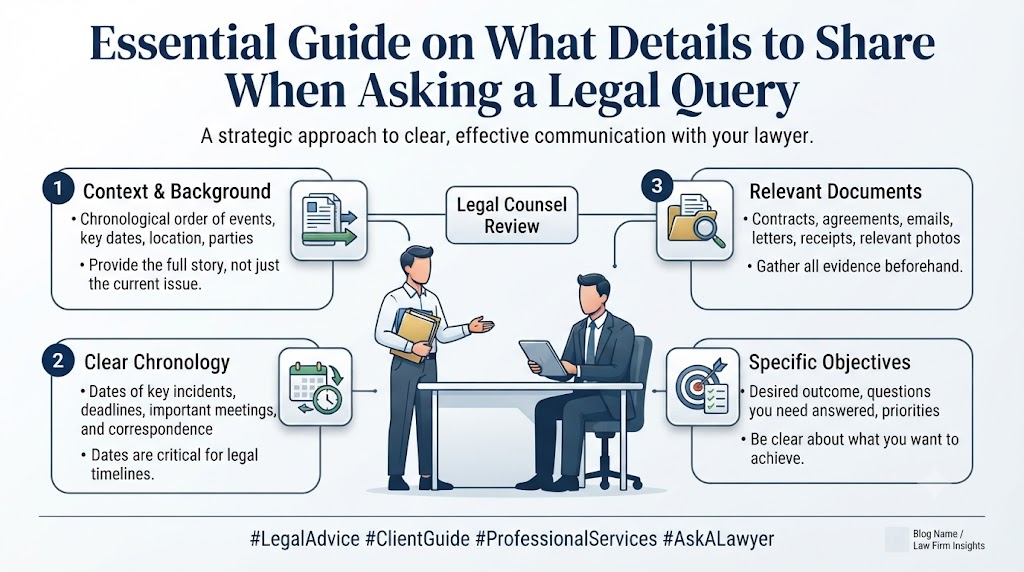
Timelines are extremely useful in legal matters. Events unfold over days, weeks, or months, and the sequence of actions often determines how a situation evolved. Teach yourself to describe important events in the exact order they happened. Include exact dates where possible. If you cannot remember the exact day, provide approximate dates, such as “around the second week of March.” Mention important conversations, written notices, payments, agreements, and complaints in the order they occurred. WakilSahab’s current legal guidance specifically recommends preparing a clear summary of events and listing important dates before starting an online consultation or discussion. A structured timeline helps readers and professionals follow the story without confusion.
Include the Names or Roles of People Involved
Identifying the parties involved helps clarify who is facing whom. Depending on the situation, you may need to mention yourself and another individual, an employer, a landlord, a tenant, a company, a business partner, a family member, a customer, or a service provider. However, you must be careful about personal privacy. You do not need to publish full legal names, phone numbers, home addresses, or government identification numbers in a public forum. Share only the roles or general identities necessary to explain the legal query.
Mention the Relevant Location
Location plays a major role in legal matters. You should mention the relevant city, state, district, workplace location, property location, or court jurisdiction where the issue took place. Different laws, local regulations, courts, and authorities apply depending on where an event occurs. You should never assume that every legal rule is identical across all states in India. Mentioning the location ensures that the discussion remains grounded in the correct regional context.
Explain What You Have Already Done
Before asking a legal question, it is essential to mention any previous steps you have already taken. Previous actions change the current status of a matter completely. Consider whether any of the following have occurred:
- A formal legal notice was sent or received.
- A written complaint was filed with an authority.
- A police report or FIR was lodged.
- The company or opposing party was contacted via email or letter.
- A payment was made or withheld.
- A settlement or meeting was attempted.
- A court case or consumer forum complaint was filed.
- A lawyer was previously consulted.
Mentioning these actions prevents people from suggesting steps you have already tried and gives an accurate picture of where the matter currently stands.
Share Relevant Documents
Documents are often the backbone of any legal discussion. Having the right paperwork ready makes it much easier to explain your situation accurately.
Essential Document Categories
- Agreements and Contracts: Rental agreements, employment contracts, business partnership deeds, and service terms.
- Communications: Official notices, demand letters, emails, text messages, and chat transcripts.
- Financial Records: Bank statements, invoices, payment receipts, tax papers, and transaction slips.
- Official Records: Property papers, mutation records, police complaints, court filings, and government notices.
WakilSahab’s current legal guidance recommends keeping relevant agreements, notices, emails, financial records, and court papers ready when discussing a legal issue. However, you should not upload every personal document automatically. Share only what is directly relevant to your question, and always protect or redact sensitive information.
Mention Important Deadlines
Time is frequently critical in legal situations. If your matter involves a deadline, you must highlight it clearly. Mention upcoming court dates, notice response deadlines, payment due dates, contract expiration dates, or statutory filing deadlines when they apply. Do not rely on universal limitation periods without checking verified legal sources, as legal deadlines vary widely based on the specific type of case and jurisdiction.
Explain What the Other Side Has Said or Done
A one-sided story can make it difficult to understand a dispute. To get useful insights, you should include relevant statements, demands, or actions from the opposing party. Did the other party send a refusal letter, issue a termination notice, make a specific demand, threaten legal action, or deny liability? Clearly distinguish between what you personally know as a verified fact and what you merely suspect or assume. Separating facts from assumptions makes your query much more credible.
Share Relevant Evidence
Facts describe what happened, but evidence helps support those facts. When asking a legal query, mention what evidence you have available to back up your claims.
Evidence can include photographs, lawfully obtained recordings, written receipts, emails, delivery confirmations, or witness statements. Never attempt to manufacture, alter, or obtain evidence through unlawful means. Honest presentation of available evidence is always the best approach.
Be Honest About Unfavorable Facts
Many people make the mistake of hiding facts that they believe weaken their position. They might leave out a delayed payment they made, a clause they missed in a contract, or a warning they received. A lawyer or legal community needs a complete and honest picture to provide useful guidance. Leaving out unfavorable facts leads to an incomplete understanding of the situation. WakilSahab’s current guidance stresses sharing relevant facts honestly, including information that may seem disadvantageous to your case.
Clearly State What You Want to Know
A good legal query always ends with a clear, specific question. Instead of leaving the reader wondering what you need, state your objective directly.
Examples of Clear Closing Questions
- “What legal options are generally available in situations involving delayed salary payments?”
- “What documents should I gather before speaking to a property lawyer?”
- “What factors should I understand before responding to this legal notice?”
- “What are the possible next steps to discuss during a formal legal consultation?”
State your core question plainly so respondents can address your exact concerns. Avoid asking too many unrelated questions in a single query; if you have multiple distinct legal problems, split them into separate, focused discussions.
Legal Query Details by Common Problem
Different legal areas require different types of details. Here is what you should focus on depending on your specific situation:
Property Matters
Mention ownership documents, title deeds, possession status, exact location, lease agreements, property notices, payment records, and the specific nature of the boundary or ownership dispute.
Family Matters
Mention family relationships, important marriage or separation dates, existing court orders or agreements, the welfare of children where applicable, and any previous mediation or court proceedings. Handle sensitive family details with discretion.
Employment Matters
Mention your employment status, joining date, employment contract terms, workplace grievances, formal notices received, termination letters, salary records, and all relevant communication logs.
Contract Matters
Discuss the signed agreement, participating parties, signing date, key disputed clauses, financial transactions, alleged breaches, formal notices exchanged, and the specific clarification you are seeking.
Consumer Matters
Discuss the product or service purchased, purchase date, invoice numbers, total payment made, complaints registered with the business, written responses received, and the resolution you requested.
Criminal or Police-Related Matters
Mention incident details, dates, location, whether a police complaint or FIR was filed, notices received from authorities, and the current stage of the matter. For urgent criminal matters, avoid public forums and consult a qualified criminal defense advocate immediately.
Cyber or Online Legal Matters
Discuss screenshots, digital messages, account identifiers, transaction references, dates, platform names, and official cybercrime reports already submitted. Never publish passwords, OTPs, bank PINs, or financial credentials.
Business and Corporate Matters
Discuss commercial contracts, business relationships, corporate communications, payment ledgers, formal notices, and relevant corporate timelines.
What Not to Share in a Public Legal Query
Protecting your personal privacy when asking questions online is essential. You must avoid posting unnecessary sensitive information in public forums or open community spaces.
- Never share passwords, OTPs, or bank PINs.
- Do not post full financial credentials or credit card numbers.
- Avoid publishing full identity document numbers such as Aadhaar, PAN, or passport numbers.
- Redact confidential business information, trade secrets, or intimate personal photos from documents before sharing them publicly.
Always review the privacy terms of any online platform you use. When your matter involves highly sensitive documents or private identifiers, use private consultation channels rather than public discussion boards.
Public Legal Question vs Private Legal Consultation
It is important to understand the boundary between public platforms and private consultations.
A public legal discussion forum helps users discuss general legal concepts, understand procedures, and learn from shared community information. It does not create an advocate-client relationship. A private consultation with a licensed advocate is necessary when your matter involves sensitive documents, confidential personal identifiers, or detailed case strategy. WakilSahab provides access to both public community discussions and professional lawyer discovery tools to help you choose the right path.
Common Mistakes When Asking a Legal Query
- Leaving Out Dates: Forgetting to mention when events happened makes it impossible to assess timelines.
- Hiding Unfavorable Facts: Omitting details that you think make you look bad creates a distorted picture.
- Uploading Unrelated Papers: Sharing random documents that have nothing to do with the core issue.
- Asking Vague Questions: Writing broad statements without a clear ending question.
- Confusing Assumptions with Facts: Presenting personal guesses as verified truths.
- Ignoring Location: Failing to mention the city or state where the incident occurred.
- Sharing Sensitive Data: Posting passwords, full identity numbers, or private financial details publicly.
When an Online Legal Query Is Not Enough
While online legal information and community discussions are useful for general education, certain high-stakes situations require immediate, direct professional intervention. You should speak to a qualified advocate directly if:
- You have received a formal court summons or urgent legal notice.
- You are facing potential arrest or ongoing criminal proceedings.
- You are approaching a strict legal deadline or limitation period.
- You are signing a complex high-value commercial contract or property deed.
- You are dealing with an intense, escalating family or property dispute.
Online general information can never replace a personalized review of your specific facts and documents by a qualified professional.
How WakilSahab Can Help Users Ask Legal Questions
WakilSahab.in is designed to bridge the gap between ordinary people and legal guidance. It provides a legal community where users can ask legal questions, explore verified lawyers, read educational legal blogs, and browse different practice areas. By preparing a structured query with clear facts, organized timelines, relevant documents, and specific questions, you can make the best possible use of legal discussion forums and professional consultation resources. WakilSahab empowers you to approach legal education with confidence and clarity.
Frequently Asked Questions
What information should be included in a legal query?
A strong legal query should include a clear statement of the main problem, a chronological timeline of events, relevant dates, the location or jurisdiction, the roles of people involved, actions already taken, key documents, and a specific final question.
Why do dates matter in a legal question?
Dates establish the timeline of events, help determine whether deadlines or limitation periods apply, and show how a dispute evolved between the parties involved.
Which documents should be shared when discussing a legal issue?
You should keep relevant agreements, contracts, formal notices, emails, receipts, and related financial or official records ready. However, you should only share documents that directly relate to your question and protect sensitive personal details.
Should I include personal details in a public legal query?
You should share only the necessary background facts and roles. Never publish passwords, OTPs, bank PINs, full identity numbers, or highly confidential information in public forums.
How should I explain a legal problem clearly?
Start with a one-sentence summary of the core issue, followed by a short chronological timeline of what happened, what the other party did, and what actions you have already taken.
What should I do if I am missing important documents?
Mention clearly in your query that certain documents are currently unavailable while describing the events based on your best recollection and available communications.
Is a public legal forum suitable for sensitive information?
No. Public forums are meant for general legal discussions and educational queries. Highly sensitive documents or confidential matters should be handled through private consultation channels with a qualified advocate.
Why does location matter in a legal query?
Laws, court procedures, and local regulations vary by region and jurisdiction. Mentioning the city and state ensures that the legal context is accurate.
When should I speak directly with a lawyer instead of asking online?
You should consult a qualified advocate directly if you receive a court summons, face criminal proceedings, have an urgent deadline, or need to review complex high-stakes contracts.
How can I ask a clear legal question online?
Keep your language simple, stick to verified facts rather than assumptions, organize your timeline chronologically, remove emotional language, and end with a direct, specific question about what you need to understand.
Conclusion
Preparing a clear and structured legal query makes a significant difference when seeking guidance or discussing a matter online. As explored throughout this guide, an effective legal query depends on presenting verified facts rather than assumptions, organizing events in chronological order, mentioning relevant dates and locations, identifying the parties involved, and outlining any previous actions already taken. Gathering the right documents—such as agreements, notices, and financial records—while carefully protecting sensitive personal data ensures that your query remains both safe and informative.