

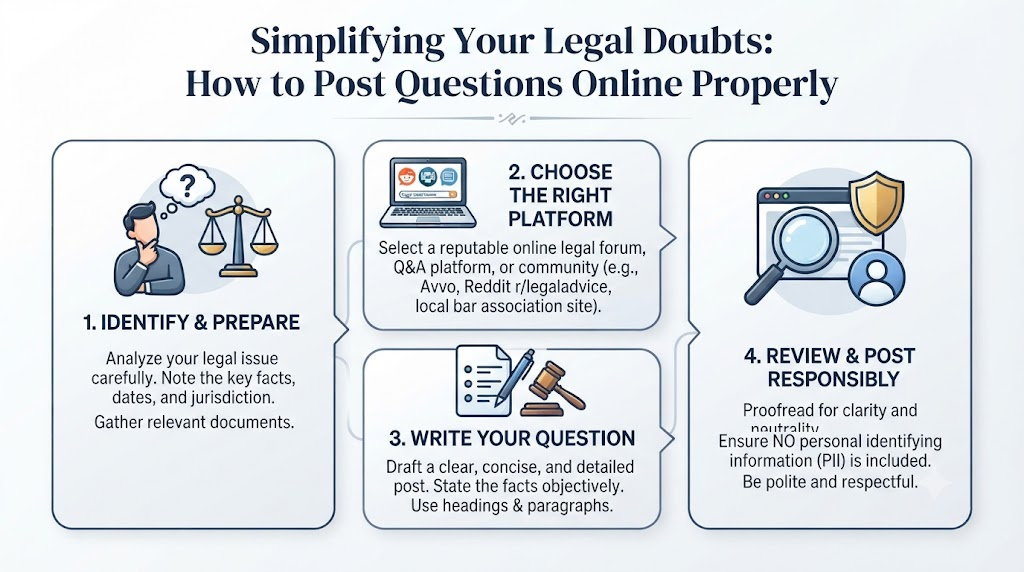
Introduction
When a legal problem suddenly appears in daily life, finding quick answers is often the first instinct. People search online for guidance when they receive an unexpected notice, sign a complex agreement, face a property dispute, encounter an employment issue, or simply wonder about their legal rights and responsibilities. The internet offers a vast amount of general legal information, and digital legal platforms allow individuals to present their concerns to a wider community of peers and professionals. However, getting useful information from an online platform depends heavily on how the question is framed. Asking the right question is important because unclear or vague inquiries often lead to general, incomplete, or confusing responses. When a description lacks necessary facts or structure, anyone trying to understand the situation—whether a peer in a forum or a legal professional—is left guessing about the core issue. This guide explores how to write a clear, factual, and focused legal question online, helping you communicate your concerns effectively while protecting your privacy and understanding the limits of digital legal guidance.
What Is an Online Legal Question?
An online legal question is an inquiry posted on a digital legal platform, forum, or community board where individuals seek to understand everyday legal concerns. These platforms offer a space to learn from general legal information, read discussions around different legal subjects, and gain initial perspectives on common disputes. An online question is typically an initial step toward understanding a legal issue. It helps clarify whether a situation requires immediate action, further research, or professional intervention. However, the exact usefulness of any answer received online depends heavily on the accuracy of the facts presented, the documents available, and the jurisdiction involved. General online information provides educational context, but it rarely accounts for every nuance of a specific dispute.
Why Asking a Clear Legal Question Matters
The quality of an online response is directly tied to the quality of the question asked. When a query is vague—such as stating, “I have a property problem, what should I do?”—it lacks the context needed to provide meaningful insight. A property dispute could involve landlord-tenant disagreements, ancestral inheritance claims, builder delays, or boundary disputes, each governed by entirely different legal principles. A clear, well-structured question gives readers and legal professionals a solid understanding of the issue. It highlights the core problem, minimizes misunderstandings, and invites focused, practical answers rather than generic guesses. Taking a few extra moments to organize your thoughts ensures that your time—and the time of those reading your post—is used effectively.
Know What You Want to Ask
Before typing out your query, take a moment to identify the exact information you need. Many people type out a long narrative without a clear objective. Determine what you are trying to find out.
For example, you might want to know:
- Whether an official notice requires an immediate written response.
- What types of documents typically matter in a specific type of agreement.
- What general legal process usually applies to a consumer complaint.
- Whether your situation warrants consulting a qualified lawyer directly.
Keeping your focus narrow makes your post easier to read and understand. Asking one well-defined question is far more effective than combining multiple unrelated queries into a single, chaotic post.
Start With the Main Legal Problem
Begin your post by summarizing the core issue in one or two simple sentences. Putting the primary problem upfront gives readers an immediate frame of reference before they dive into background details.
For example, instead of starting with a lengthy history of a business partnership, state clearly: “My employer has withheld my final month’s salary after resignation without providing a written explanation.” Once the main problem is established, you can provide the necessary background context. This structure prevents readers from getting lost in unnecessary details and helps them grasp your situation immediately.
Include the Important Facts
Every legal concern involves specific facts that change how a situation is viewed. While you should avoid sharing your entire life story, certain details are essential for context.
Depending on your situation, relevant facts may include:
- The parties involved (e.g., tenant and landlord, consumer and manufacturer, employer and employee).
- Actions or events that triggered the dispute.
- Relevant agreements, contracts, or written policies.
- Financial transactions, payments, or receipts.
- Previous complaints, warnings, or official correspondence.
Keep in mind that the exact facts needed depend entirely on the nature of your legal issue. Focus on objective events rather than emotional reactions.
Mention the Relevant Dates
Time plays a critical role in legal matters. Knowing when events occurred helps establish a chronological timeline of the dispute.
Be sure to mention key dates, such as:
- When an agreement or contract was signed.
- When a payment was made or a service was delivered.
- When a legal notice, warning letter, or email was received.
- When a dispute officially started or when an incident occurred.
Note: Do not rely on general online estimates for limitation periods or legal deadlines. Laws and rules vary by jurisdiction, and missing a deadline can have serious consequences. Always verify critical timelines with a qualified professional.
Mention Your Location and Jurisdiction
Laws, rules, and procedures often depend heavily on geography. A rule that applies in one state, city, or country may differ entirely from another. Furthermore, different courts, administrative bodies, or consumer forums operate under specific regional authorities. When posting a legal question online, mention where the issue occurred and where the relevant property, employer, agreement, or authority is located. Providing this geographic context ensures that any general information you receive aligns with the correct legal framework.
Explain What Has Already Happened
Before asking for guidance, clarify what steps you have already taken. Have you sent a formal email, filed an online consumer complaint, spoken with an authority, signed a temporary settlement, or received a legal summons? Explaining past actions prevents respondents from offering advice you have already tried. It also provides a complete picture of the current status of the dispute, showing whether the matter is still in a discussion phase or has escalated to formal proceedings.
Mention What You Want to Know
It is common for people to share a long list of facts and forget to ask an actual question. Clearly separate the background story from your core inquiry.
End your post with one or two direct, focused questions. For example: “Based on these facts, does a consumer have the right to demand a refund under standard warranty terms when the product fails within the first week?” Clear questions invite targeted and useful responses.
Good Legal Question vs. Vague Legal Question
| Question Type | Example | Why It Works or Does Not Work |
| Vague Property Question | “I have a property dispute with my neighbor over a wall. What are my rights?” | Does not work: It lacks location details, ownership status, the nature of the wall, past agreements, and specific actions taken, making it impossible to give relevant information. |
| Good Property Question | “In Maharashtra, my neighbor built a shed that crosses our shared boundary line last month. We have a registered sale deed. What initial steps can I take to address this boundary overlap?” | Works: It specifies the location, the exact problem, the timeline, the supporting document available, and asks a focused question about initial steps. |
| Vague Employment Question | “My boss is unfair and I want to quit. Can I sue them?” | Does not work: It relies on subjective terms (“unfair”) and lacks contract details, notice period terms, and the specific reason for dispute. |
| Good Employment Question | “According to my employment contract in Karnataka, my notice period is 30 days. I resigned last week, but my employer is refusing to clear my pending dues until I complete an extra project not listed in my duties. What does general employment practice say about this?” | Works: It outlines the contract terms, the exact dispute, the location, and asks a balanced, non-emotional question. |
How Much Background Information Should You Include?
Striking the right balance between too little and too much information is essential. Including too little information leaves readers guessing, while sharing excessive personal history obscures the actual legal issue.
Focus on facts that directly influence the rights, obligations, or agreements involved. Omit personal grievances, emotional frustrations, or irrelevant historical background. A concise, well-structured timeline is almost always more useful than a lengthy, unorganized story.
How to Organize a Legal Question
To ensure your post is easy to read, follow a simple, structured format:
- The Problem: State the main issue in one clear sentence.
- The Facts: Briefly outline what happened, who is involved, and the context.
- Dates and Location: Mention when key events occurred and the relevant city or state.
- Actions Taken: Note any steps you have already tried (emails sent, notices received).
- The Question: End with a clear, specific question about what you want to understand.
This step-by-step approach keeps your inquiry logical and accessible to anyone reading it.
Documents That May Help Explain a Legal Question
Documents provide crucial context for legal inquiries. Written records eliminate guesswork and provide accurate details about obligations and terms.
Helpful documents often include:
- Written contracts, agreements, or terms of service.
- Legal notices, demand letters, or official warnings.
- Receipts, invoices, bank statements, or payment proofs.
- Official letters, emails, or written text messages.
- Property deeds, allotment letters, or lease agreements.
Crucial Privacy Warning: Never post sensitive documents or private personal details publicly online. Always redact confidential numbers, private addresses, and financial identifiers before sharing any excerpts.
How to Protect Personal Information Online
Protecting your privacy is paramount when using public forums and online legal platforms. While explaining your problem is necessary, exposing sensitive data creates unnecessary security risks.
Never share the following information publicly:
- Aadhaar numbers or government identification details.
- PAN card numbers or tax identifiers.
- Bank account numbers, credit card details, or UPI IDs.
- Passwords, PINs, or One-Time Passwords (OTPs).
- Private residential addresses or phone numbers.
- Highly confidential business secrets or proprietary data.
Most legal questions can be described effectively using general terms, anonymized names, and broad descriptions without exposing private data. When sensitive documents require review, use secure, private consultation channels with verified professionals rather than public message boards.
How to Ask About a Legal Notice
Receiving a legal notice can be stressful, but structuring your inquiry properly helps you gather constructive perspectives.
When asking about a notice online, consider including:
- The date the notice was received and how it was delivered (email, post, courier).
- Who sent the notice (an individual, a company, or an advocate).
- The general subject or grievance mentioned in the notice.
- The specific action or remedy being demanded.
- Whether the notice mentions a reply deadline.
Important: Do not ignore a legal notice, and do not rely solely on public forums for urgent legal defenses. Notices often carry strict legal timelines that require prompt, formal attention from a qualified advocate.
How to Ask Questions About Property Issues
Property matters often involve complex titles, agreements, and local municipal laws. To frame a clear property question, focus on objective details. Mention the type of property (residential apartment, land, commercial space), your ownership or tenancy relationship, the location, and any relevant documents you hold (such as a registered sale deed or lease agreement). Clearly state whether the issue involves builder delays, tenant disputes, society maintenance disagreements, or boundary concerns, without drawing definitive legal conclusions.
How to Ask Questions About Family Law Issues
Family law matters involve sensitive personal relationships, emotional stress, and delicate privacy considerations. When discussing family-related legal questions online, maintain a respectful, objective, and neutral tone. Focus on the relevant facts, existing agreements or court orders (if any), key dates, and what you are trying to understand regarding general legal procedures. Avoid sensational language, emotional attacks, or judgmental statements about other parties. Protecting your privacy and the privacy of family members—especially children—is especially critical in family matters.
How to Ask Questions About Employment Issues
Employment disputes often turn on the exact wording of employment contracts, company policies, and applicable labor regulations. When asking about a workplace concern, mention your employment status (full-time, probation, contractor), whether you signed a written agreement, the dates of key workplace actions, and any written communications exchanged with your employer or HR department. Keep your inquiry focused on the specific contractual or statutory issue rather than interpersonal workplace conflicts.
How to Ask Questions About Contracts
Contracts and agreements govern business and personal transactions, but pasting an entire multi-page contract online is neither practical nor secure. Instead of sharing the full document, summarize the relevant clause or section that is causing confusion or dispute. Explain the context of the agreement, when it was signed, and what you are trying to understand regarding specific obligations or termination terms. For significant contracts involving major financial stakes, always share the complete document privately with a qualified lawyer.
How to Ask Questions About Consumer or Online Fraud Issues
Consumer disputes and online fraud require careful preservation of evidence. If you are asking about a defective product, a denied service, or a suspicious online transaction, organize the facts around purchase dates, payment methods, merchant communications, and complaint history. Preserve screenshots, order IDs, invoices, and email threads securely. Note: If you suspect active cybercrime or financial fraud, do not rely solely on online forums; report the incident immediately through official government cybercrime portals or local law enforcement authorities.
How WakilSahab Can Help People Ask Legal Questions Online
Navigating legal uncertainties is easier when you have access to structured guidance and reliable resources. WakilSahab provides an online platform where users can explore lawyers, ask legal questions, participate in legal discussions, and access informative legal content. The platform’s legal discussion forum offers a welcoming space to raise everyday legal doubts, read peer discussions, and explore perspectives across various practice areas. While online forums help build foundational awareness, WakilSahab also connects users with qualified legal professionals when personal consultation becomes necessary.
What to Do After Posting a Legal Question
Once you post your question on a legal platform, read the responses carefully and evaluate them against the objective facts of your situation. Keep in mind that different respondents may interpret your situation differently or make varying assumptions. If a response is unclear, ask polite follow-up questions to clarify specific points. Remember that online responses represent general opinions and educational perspectives, not binding legal counsel. For important matters, take the insights you gathered and discuss your complete situation privately with a qualified lawyer.
When an Online Legal Question Is Not Enough
While online forums and informational articles are valuable for initial learning, certain situations demand immediate professional intervention.
Direct legal consultation is typically necessary when dealing with:
- Formal court summons, notices, or ongoing litigation.
- Strict legal deadlines or urgent response windows.
- Serious criminal allegations or police investigations.
- Major property disputes involving high financial value or title challenges.
- Complex divorce, child custody, or domestic violence matters.
- Significant commercial contracts, business liabilities, or substantial financial transactions.
Professional advice ensures that your rights are actively protected and that formal legal steps comply with applicable laws.
Common Mistakes When Asking Legal Questions Online
Avoiding common pitfalls ensures a better experience when seeking online legal information.
Frequent mistakes include:
- Asking extremely vague questions without context.
- Leaving out crucial dates, locations, or background facts.
- Including long, emotional personal stories instead of objective facts.
- Hiding important details that change the nature of the dispute.
- Posting private documents, phone numbers, or financial data publicly.
- Combining multiple unrelated legal questions into a single chaotic post.
- Expecting guaranteed legal outcomes from a public forum answer.
- Assuming that general online answers apply universally across all jurisdictions.
- Ignoring critical timelines and deadlines while waiting for online replies.
General Example:
- The Problem: My landlord is refusing to return my security deposit after my tenancy agreement ended.
- Relevant Facts: I rented an apartment in Pune for 11 months under a written agreement. I handed over possession keys last month in clean condition.
- Important Dates: Agreement ended on August 31; keys handed over on September 1.
- Location: Pune, Maharashtra.
- Action Already Taken: Sent two follow-up emails with inspection photos, but received no reply.
- Documents Available: Signed rent agreement, bank transfer receipts of deposit, exit inspection photos.
- The Question: What general steps can a tenant take under Maharashtra tenancy practices to request the return of a withheld security deposit?
Frequently Asked Questions
What is the best way to start a legal question online? Start by stating your main problem in one clear sentence, followed by the essential facts, relevant dates, and your location, ending with a specific question.
Should I share my personal documents publicly when asking a legal question? No. Never share sensitive documents, personal identification numbers, bank details, or private addresses on public forums. Review documents privately with a qualified lawyer.
Why is my location important when asking a legal question in India? Laws, court procedures, consumer forums, and municipal regulations can vary significantly depending on the state, city, and local jurisdiction involved.
Can an online legal question replace a consultation with an advocate? No. Online legal questions provide general educational information and initial perspectives, but they do not replace personalized legal advice from a qualified advocate.
What details should I include if I received a legal notice? Mention the date of receipt, who sent it, the general grievance stated, the specific remedy demanded, and whether any response deadline is specified.
Is it safe to discuss family law matters on public legal forums? Yes, provided you keep your description objective, avoid sensational language, and completely omit private names, addresses, and sensitive personal identifiers.
What should I do if my question receives multiple conflicting answers? Understand that different respondents may make different assumptions. Evaluate the answers against your objective facts and consult a qualified lawyer for clarity on important matters.
How do I ask about an employment dispute without risking my job? Focus your query on general contract terms, company policies, and notice periods without mentioning your employer’s company name or identifying personal details.
Are online legal forum answers legally binding? No. Responses on public forums are informal educational discussions and carry no binding legal authority or professional guarantee.
When should I stop searching online and hire a lawyer directly? You should consult a lawyer immediately if you face court proceedings, urgent response deadlines, serious financial consequences, criminal matters, or complex property disputes.
Conclusion
Asking a legal question online is a helpful first step toward understanding an unfamiliar legal problem. By organizing your facts, including relevant dates and location details, focusing on a clear core question, and protecting your personal privacy, you can communicate your concerns effectively and receive meaningful educational insights. While digital platforms offer a convenient way to explore everyday legal topics and connect with resources, complex or urgent matters always require direct guidance from a qualified professional. Platforms like WakilSahab provide helpful spaces for legal discussions, peer questions, and lawyer discovery, helping you bridge the gap between initial curiosity and informed legal action.