

Introduction
Many people tend to wait before seeking legal advice, often hoping a complex issue will resolve itself over time, wanting to save on consultation costs, or simply feeling unsure whether their problem is serious enough to warrant professional attention. This delay is understandable, but in many legal contexts, waiting can significantly reduce your options. Certain legal matters become much harder to manage when important deadlines pass, official documents are ignored, crucial evidence disappears, or statements are made to authorities without fully understanding their legal consequences. Knowing when to consult a lawyer can make a substantial difference in protecting your rights, finances, and peace of mind. While not every everyday disagreement requires immediate litigation, recognizing the signs that call for prompt professional guidance can help you avoid preventable mistakes. This article explores common situations where speaking with a legal professional sooner rather than later is important, helping ordinary individuals navigate sensitive circumstances responsibly and effectively across India.
Why Timing Matters When Dealing With A Legal Problem
The timing of legal advice is rarely arbitrary. In many situations, the law places strict timelines on how quickly a person must respond to an official communication, file a claim, or challenge an administrative order. When individuals delay seeking professional guidance, they risk missing critical windows of opportunity. For example, responding to a formal legal notice within a specified period can sometimes prevent a matter from escalating into costly court proceedings. Conversely, ignoring such a notice may lead the opposing party to assume liability or initiate unilateral legal action. Furthermore, preserving evidence becomes progressively more difficult as time passes. Physical documents get misplaced, digital communications are deleted or lost, and memories of key witnesses fade. Early consultation with a qualified professional does not automatically mean rushing to file a lawsuit. In many cases, an initial consultation simply helps a person understand their legal standing, clarify their rights, and evaluate available alternatives, which may include negotiation, mediation, or careful documentation. Understanding these procedural realities early on allows individuals to approach their challenges with greater clarity and confidence.
Signs That You Should Consult A Lawyer Immediately
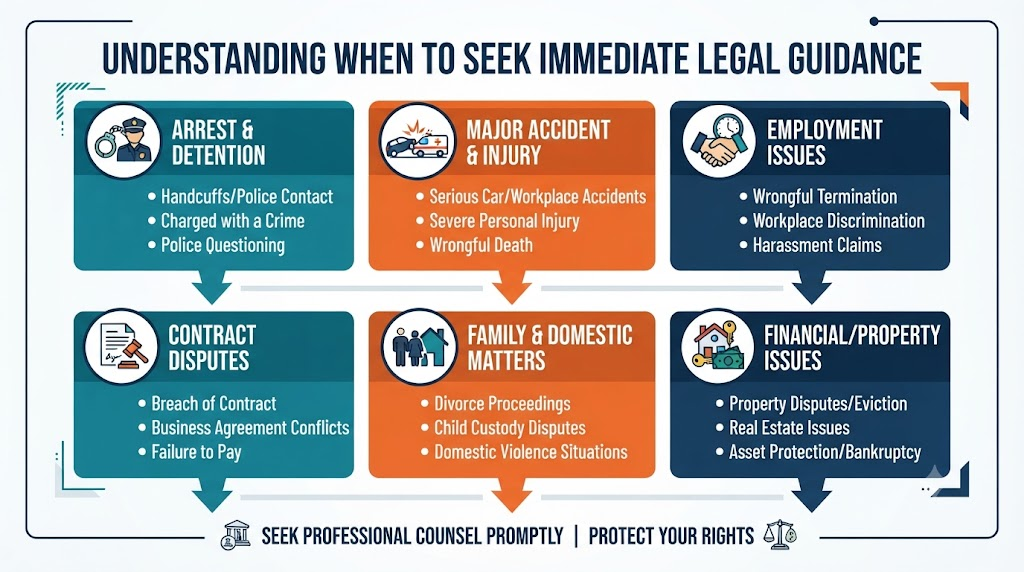
Recognizing when a legal issue has moved beyond casual disagreement into territory that requires professional intervention is vital. While minor disputes among neighbors or colleagues can often be resolved through open communication, certain developments demand immediate attention. These warning signs typically involve formal legal instruments, potential threats to personal liberty, unexpected financial exposure, or severe operational disruptions in business or employment. When facing circumstances such as receiving an official court summons, being detained or questioned by law enforcement, discovering unauthorized interference with property rights, or dealing with an aggressive corporate or contractual dispute, waiting for the situation to naturally improve is rarely effective. Prompt professional advice helps identify immediate risks, ensures that deadlines are met, and provides a structured framework for addressing the problem without escalating tensions unnecessarily.
When You Receive A Legal Notice
Receiving a formal legal notice can be an unsettling experience, but it is fundamentally a communication that requires a measured, thoughtful response. A legal notice typically outlines grievances, demands specific actions, requests compensation, or signals an intention to initiate legal proceedings if the recipient fails to comply within a stated timeframe. People should read the document carefully and avoid the temptation to ignore it or respond hastily in anger. The response period mentioned in the notice, the specific claims being made, the supporting documents referenced, and the potential consequences described all require careful professional review. Receiving a legal notice does not automatically mean that the sender’s claims are entirely accurate or legally enforceable. However, failing to respond or making careless admissions in an informal reply can severely damage your legal position. Consulting a qualified lawyer promptly helps ensure that your response is legally sound, protects your interests, and addresses the sender’s claims appropriately.
When You Receive Court Papers Or A Summons
Court documents, summons, and official notices from judicial or quasi-judicial bodies must never be ignored. These documents generally indicate that a formal legal case or proceeding has been initiated against you or that your presence is required at a specified date and time. Checking the name of the court, the specific case details, the scheduled hearing date, the names of the opposing parties, and any instructions included in the paperwork is essential. Court procedures, procedural rules, and statutory deadlines can vary significantly depending on the nature of the matter and the governing laws in India. Relying on informal advice from friends, family, or unverified internet forums when facing court proceedings can lead to missed hearings, ex-parte orders, or severe procedural penalties. Obtaining professional legal advice promptly ensures that you understand your obligations, prepare necessary documentation, and present your case effectively through proper legal channels.
When You Are Arrested, Detained, Or Called By Police
Encounters with law enforcement, particularly involving detention, arrest, or formal questioning regarding a criminal investigation, require immediate and careful attention. A person’s constitutional rights, safeguards, and available legal remedies depend heavily on the specific facts of the incident and the applicable criminal laws in India. Seeking qualified legal assistance promptly ensures that your rights are protected throughout the investigative process. Legal counsel can advise you on how to interact responsibly with authorities, review the validity of procedural steps, and represent your interests before the appropriate judicial authorities. Professional guidance during such critical moments helps ensure that actions taken are lawful, measured, and fully aligned with your legal rights.
When You Are Accused Of A Criminal Offence
Facing a criminal allegation or accusation can have profound personal, professional, and social consequences. Because the stakes are exceptionally high, obtaining qualified legal advice before making major decisions, issuing public statements, or meeting with investigators is crucial. Criminal law involves complex evidentiary standards, and minor missteps in handling communications or documents can have lasting repercussions. Individuals facing criminal accusations should preserve all relevant documents, text messages, emails, financial records, and communication histories that might have a bearing on the matter. Deleting or altering digital or physical records can create severe legal complications. Consulting an experienced criminal defense lawyer allows you to understand the charges against you, evaluate the evidence objectively, and plan an appropriate defense strategy within the bounds of the law.
When A Property Or Land Dispute Starts
Property and land disputes are among the most persistent and emotionally taxing legal issues individuals face. Situations such as boundary disagreements, ownership conflicts, disputed inheritance claims, unauthorized construction, tenant-landlord impasses, or challenges regarding title deeds require careful handling. Over time, property disputes tend to become increasingly complicated as possession changes, third-party interests are introduced, or documents get misplaced. Checking foundational title documents, sale deeds, allotment letters, mutation records, and historical agreements with the help of a qualified lawyer is essential. A legal professional can help trace the chain of ownership, examine local land revenue records, and advise whether the dispute can be resolved through negotiation, partition, or formal civil litigation. Early intervention often prevents minor encroachments or disagreements from turning into prolonged, multi-generational legal battles.
When You Are Facing A Family Or Matrimonial Legal Dispute
Family and matrimonial disputes—ranging from divorce and separation proceedings to child custody disagreements, maintenance claims, domestic concerns, and inheritance partitions—involve delicate personal dynamics and sensitive legal rules. Navigating these matters requires a calm, structured approach that balances emotional well-being with long-term legal protection. Early legal advice helps individuals understand the applicable legal framework, their rights regarding property and maintenance, and the procedures involved in mediation or court-supervised resolution. In situations involving immediate physical danger, domestic violence, or urgent safety concerns, prioritizing emergency assistance, protective shelters, or appropriate law enforcement support is essential before undertaking standard legal consultations. Consulting a sensitive, experienced family lawyer provides clarity and helps minimize unnecessary distress for everyone involved.
When An Employment Dispute Becomes Serious
Employment relationships are governed by statutory rules, company policies, and binding employment agreements. When disputes arise—such as sudden termination, allegations of workplace misconduct, unpaid wages, discrimination, or breaches of non-compete clauses—the financial and career consequences can be substantial. Reviewing employment contracts, appointment letters, performance appraisals, written warnings, and email correspondence with a legal professional helps clarify whether the employer’s actions comply with applicable labor laws. Employment laws vary depending on the sector, jurisdiction, and terms of engagement. Seeking timely advice ensures that you understand your options, whether through internal grievance redressal, labor forums, or formal legal action.
When You Are Asked To Sign An Important Contract
Entering into high-value agreements without fully understanding their terms is a common source of future litigation. Whether you are signing a commercial lease, a business partnership agreement, a property purchase contract, a loan document, or an employment settlement, the written terms generally bind the signatories. People should avoid signing complex documents simply because another party assures them the clauses are “standard” or “routine.” If the financial, operational, or legal consequences of the agreement are significant, asking a qualified lawyer to review the document can reveal hidden liabilities, ambiguous clauses, or unfair conditions. Taking this preventative step safeguards your interests and reduces the likelihood of future contract disputes.
When Starting Or Running A Business Creates A Legal Risk
Entrepreneurs, startup founders, and business owners frequently encounter complex legal obligations, ranging from entity registration and vendor contracts to intellectual property protection, regulatory compliance, and shareholder disagreements. Operating a business without adequate legal oversight can expose owners to unexpected liabilities, regulatory penalties, and commercial disputes. Engaging with a corporate or commercial lawyer early in the business lifecycle helps establish proper operational structures, draft robust client and vendor agreements, and ensure compliance with statutory requirements. Proactive legal review often identifies potential compliance gaps or contractual vulnerabilities before they evolve into disruptive business lawsuits.
When You Are Involved In A Serious Accident
Road accidents, workplace mishaps, and incidents resulting in serious injury or substantial property damage bring immediate physical, emotional, and financial stress. Beyond receiving medical care, dealing with insurance companies, liability determinations, and potential compensation claims requires careful documentation. Prioritizing immediate medical attention and emergency care is always the primary step after an accident. Once the situation is stabilized, preserving medical reports, police FIR copies, photographs of the scene, repair estimates, and insurance correspondence becomes critical. Consulting a lawyer experienced in accident and insurance claims helps ensure that your rights to fair compensation are protected and that claims are filed within applicable limitation periods.
When You Face A Major Financial Or Consumer Dispute
Financial disagreements, disputed investments, major consumer fraud, severe service deficiencies, and commercial debt collection issues often require formal legal intervention. When substantial sums of money or consumer rights are at stake, informal appeals to customer service or casual follow-ups may yield few results. Evaluating the documentation—including invoices, bank statements, receipts, warranties, and written agreements—with a legal professional helps determine the most effective legal forum, whether consumer dispute forums, civil courts, or specialized tribunals. Prompt advice ensures that financial claims are pursued through correct legal channels and within statutory time limits.
When You Suspect Fraud, Cybercrime, Or Identity Misuse
The increasing digitalization of daily life has led to rising incidents of cyberfraud, online financial scams, identity theft, unauthorized digital transactions, and data breaches. Discovering that you have been targeted by cybercrime requires swift and calm action to minimize further damage. Preserving digital evidence—such as transaction IDs, SMS alerts, phishing emails, screenshots, chat logs, and IP details—is essential. Victims should report incidents through official cybercrime reporting channels and consult a lawyer familiar with information technology and cyber laws. Avoid attempting retaliatory hacking or engaging directly with suspected fraudsters, as these actions can compromise official investigations.
When A Legal Deadline May Be Approaching
Time limits, known legally as limitation periods, govern how long a person has to file a lawsuit, challenge an order, appeal a judgment, or respond to a legal notice. These deadlines vary widely depending on the nature of the claim, the governing statute, the court involved, and the specific facts of the case. There is no single universal limitation period that applies to every legal problem. Relying on general estimates found on the internet to calculate your specific legal deadline is risky and can result in your claim becoming legally time-barred. If you suspect that time is running out on a dispute, consult a qualified lawyer promptly to verify the applicable timeline and protect your right to seek remedy.
When You Are Unsure About Your Legal Rights
You do not need to wait until a dispute escalates into a full-blown court case to seek professional legal guidance. Many people consult lawyers for preventive advice when they feel uncertain about a contract clause, a family property division, an employment transition, or an administrative requirement. An initial consultation can provide clarity, help you evaluate potential risks, and outline practical steps to resolve uncertainties amicably. Seeking professional guidance early often saves time, money, and emotional strain compared to reacting after a legal problem has fully materialized.
Urgent Legal Situations Compared With Situations That May Allow More Planning
| Situation | Why Prompt Advice May Matter | What You Should Do |
| Legal notice | A response period or legal claim may be involved | Read it carefully and seek professional advice |
| Court summons or papers | A hearing or procedural requirement may apply | Check the document and contact a lawyer promptly |
| Arrest or detention | Immediate legal consequences may exist | Seek qualified legal assistance promptly |
| Serious accident | Evidence, liability, insurance, or injury issues may arise | Prioritize safety and medical care, then obtain appropriate advice |
| Property dispute | Documents, possession, or ownership issues may become more complex | Gather records and seek legal guidance |
| Major contract | Signing may create important obligations | Understand the terms before committing |
| Family legal dispute | Rights and responsibilities may be affected | Seek appropriate legal advice early |
| Business dispute | Contracts, finances, or operations may be affected | Review documents and obtain professional guidance |
| Possible legal deadline | Delay may affect available options | Get advice promptly and verify the applicable deadline |
As shown above, the degree of urgency depends heavily on the unique facts, documents, and applicable laws governing each case. Evaluating your situation objectively helps determine the appropriate speed of action.
What To Prepare Before Speaking With A Lawyer
Making the most of a legal consultation requires preparation. Organizing your materials before meeting with a lawyer helps the professional understand your situation efficiently and provide more targeted advice.
- Gather Documents: Collect all relevant contracts, notices, emails, text messages, receipts, photographs, identification documents, and court papers.
- Establish a Timeline: Write down important dates, events, and communications in chronological order so the sequence of events is clear.
- Preserve Evidence: Ensure that physical records are kept safe and digital files are backed up without altering or deleting any original data.
- List Questions: Prepare a concise list of specific questions about your rights, potential risks, and next steps to discuss during the meeting.
What Not To Do While Waiting For Legal Advice
While waiting to consult a lawyer or while an issue is ongoing, certain common missteps can inadvertently worsen your legal position. Avoiding these actions helps protect your interests:
- Do Not Ignore Official Notices: Disregarding legal notices or court summons does not make the problem disappear; it often leads to adverse ex-parte decisions.
- Do Not Delete Records: Deleting messages, emails, or documents out of panic can be viewed unfavorably and may destroy crucial evidence.
- Do Not Sign Hasty Agreements: Avoid signing settlement terms, employment exits, or property waivers without professional review.
- Do Not Make Public Accusations: Posting angry or accusatory statements about the opposing party on social media can lead to defamation claims or complicate negotiations.
How To Find The Right Lawyer For An Urgent Legal Matter
Not all legal matters require the same expertise. Finding the right lawyer involves looking at factors that match your specific requirements rather than simply choosing the first available practitioner.
- Relevant Practice Area: Ensure the lawyer has demonstrated experience in the specific field relevant to your issue, whether criminal law, family disputes, property matters, corporate compliance, or civil litigation.
- Jurisdiction and Location: Legal procedures often depend on local courts and regional laws, making proximity or jurisdictional familiarity important.
- Communication and Availability: A good lawyer should communicate clearly, explain procedures in plain language, and be accessible when urgent developments arise.
- Professional Credentials: Verify professional standing, enrollment with relevant bar councils, and clear consultation terms before engaging legal services.
How WakilSahab Can Help You Find Legal Support
Navigating the legal landscape when an urgent issue arises can feel overwhelming, particularly for individuals who have never interacted with the legal system before. Platforms designed to simplify legal discovery can play a valuable role in bridging this gap. WakilSahab operates as a legal discovery and information platform across India, helping users explore advocates and legal professionals categorized by practice areas and cities. Whether you need assistance with criminal matters, family disputes, property conflicts, civil suits, or corporate advisory, the platform offers structured directories to help you begin your search. Additionally, users can explore legal discussion forums, read informative articles, and stay updated on legal developments. While platforms assist in discovering qualified professionals, evaluating a lawyer’s suitability for your specific case remains an essential personal step.
Questions To Ask During An Urgent Legal Consultation
Asking focused questions during your initial consultation helps ensure you leave with a clear understanding of your legal standing and next steps:
- What is the primary legal issue or risk in my situation?
- What critical deadlines or limitation periods apply to my case?
- What specific documents, records, or evidence do I need to provide?
- What are the realistic legal options and potential outcomes available?
- What specific actions should I avoid taking while the matter is pending?
- What will the next steps in the process involve, and what is the expected timeline?
- What are the projected professional fees and associated costs?
When You May Need More Than One Legal Opinion
In complex legal matters involving significant financial stakes, business decisions, or serious personal disputes, seeking a second legal opinion can sometimes be a prudent step. Consulting another qualified professional allows you to evaluate alternative strategies, gain fresh perspective on complicated evidence, and ensure that your chosen course of action is sound. Seeking a second opinion does not imply that the first lawyer was incorrect; rather, it reflects a thorough approach to managing high-stakes legal challenges responsibly.
Frequently Asked Questions
- When should I consult a lawyer immediately?You should consult a lawyer promptly when you receive formal legal notices, court summons, face potential arrest, experience serious accidents, or encounter urgent property, employment, or family disputes where deadlines or legal rights are at stake.
- Should I contact a lawyer after receiving a legal notice?Yes, reviewing a legal notice with a qualified lawyer helps you understand the claims made, evaluate your obligations, and respond appropriately within the specified timeframe without compromising your position.
- When should I get legal help for a court summons?You should contact a lawyer immediately upon receiving a court summons to ensure compliance with procedural requirements, check hearing dates, and prepare your defense or response properly.
- Do I need a lawyer if I am contacted by the police?Seeking qualified legal assistance promptly is advisable if you are detained, arrested, or formally questioned by law enforcement to ensure your constitutional rights are protected throughout the process.
- When should I consult a lawyer about a property dispute?Consulting a lawyer is recommended as soon as title disagreements, boundary conflicts, unauthorized construction, or tenant disputes arise, before possession issues become more complex.
- When should I seek legal advice before signing a contract?You should seek legal advice before signing high-value agreements, such as commercial leases, business partnerships, property purchases, or employment contracts, especially if the terms or liabilities are unclear.
- Can a lawyer help if I am facing an urgent family dispute?Yes, an experienced family lawyer can help you navigate sensitive matters such as separation, custody, or maintenance, while also advising on emergency protective measures if safety is a concern.
- Why are legal deadlines important?Limitation periods and procedural timelines determine your right to file claims, appeal decisions, or respond to notices. Missing these deadlines can permanently bar you from seeking legal remedies.
- What documents should I take to a lawyer consultation?Bring all relevant contracts, notices, correspondence, receipts, photographs, identification papers, and a chronological written summary of the events related to your issue.
- How can WakilSahab help me find a lawyer?WakilSahab provides a digital directory where users can explore lawyers and advocates across India by practice area and city, alongside legal forums, news, and informative blog resources.
Conclusion
Navigating legal challenges does not have to be a reactive or overwhelming experience. Understanding when to seek professional guidance allows you to approach sensitive situations with composure and foresight. Whether you are dealing with an unexpected legal notice, court documents, a criminal investigation, a serious accident, a property disagreement, a complex family matter, a business contract, or an approaching statutory deadline, timely legal consultation can help clarify your options and protect your interests. By gathering your records, avoiding hasty actions, and consulting an appropriate professional when uncertainty arises, you take active control of your legal well-being. Platforms like WakilSahab serve as a helpful starting point for exploring legal information, practice areas, and qualified advocates across India, helping you connect with the right support when it matters most.