$100 Website Offer
Get your personal website + domain for just $100.
Limited Time Offer!
Claim Your Website NowTop 20 Indian Legal Developments — 2026-May-10
Your daily briefing on the most important Indian legal developments for 2026-May-10. This digest covers Supreme Court judgements, High Court rulings, new legislation, and key legal news — compiled from trusted sources across India.
Criminal Law
1. Non-signatory wife cannot face prosecution in sole proprietorship cheque bounce case: Calcutta HC
The Calcutta High Court has quashed criminal proceedings against a sole proprietor’s wife in a cheque dishonour case under Section 138 of the Negotiable Instruments Act. The court held that vague allegations of “dominion and control” alone cannot establish criminal liability for a non-signatory spouse.
Why it matters: This ruling protects spouses from unfounded criminal prosecution in cheque bounce cases and clarifies the scope of individual criminal liability in business transactions.
Source:
Calcutta High Court
· 10 May 2026, 10:56 AM IST
·
Read full text →
Civil Law
2. Article 227 supervisory jurisdiction cannot bypass CPC Order 38 Rule 5 statutory remedy: Andhra Pradesh HC
The Andhra Pradesh High Court at Amaravati has clarified that parties cannot directly invoke Article 227 supervisory jurisdiction by circumventing statutory remedies available under CPC Order 38 Rule 5. The court dismissed a Civil Revision Petition filed in violation of this procedural hierarchy.
Why it matters: This precedent reinforces the proper hierarchy of judicial remedies and prevents misuse of high court supervisory powers, ensuring parties exhaust statutory procedures first.
Source:
Andhra Pradesh High Court
· 10 May 2026, 10:13 AM IST
·
Read full text →
Regulatory
3. Lease-based commercial projects without developer sale rights excluded from RERA: Allahabad HC
The Allahabad High Court’s Lucknow Bench has held that commercial real estate projects where developers possess only leasehold rights and lack unit-sale authority fall outside the Real Estate (Regulation and Development) Act, 2016 scope. The court emphasized that the “sale” element is essential for RERA applicability.
Why it matters: This ruling clarifies RERA’s jurisdictional boundaries for leasehold projects, reducing regulatory compliance obligations for certain lease-based commercial developments.
Source:
Allahabad High Court
· 10 May 2026, 09:45 AM IST
·
Read full text →
Supreme Court
4. SCC Vol. 3 Part 5 covers key Supreme Court cases on arbitration, civil law, IBC, and land acquisition
⚠ Low confidence: Limited source text was available. Please verify via the original source link.
SCC Online Blog has published 2026 SCC Vol. 3 Part 5 featuring landmark Supreme Court decisions on voter’s right to know antecedents, rental compensation, jurisdictional issues in referral courts, and sale of immovable property. The compilation covers critical rulings across multiple substantive law areas.
Why it matters: This compilation provides practitioners with consolidated access to important Supreme Court judgments across diverse legal domains affecting current jurisprudence.
Source:
SCC Online Blog
· 10 May 2026, 05:30 AM IST
·
Read full text →
Constitutional Law
5. Madhya Pradesh HC protects teacher’s freedom of expression in Urdu poem sharing case
⚠ Low confidence: Limited source text was available. Please verify via the original source link.
The Madhya Pradesh High Court intervened to protect a teacher who faced criminal charges for sharing an Urdu poem via WhatsApp status. The court addressed constitutional rights and issues of state overreach in prosecuting expression-based offences.
Why it matters: This ruling reinforces constitutional protection of freedom of expression and establishes boundaries on state power to prosecute shared cultural content.
Source:
Madhya Pradesh High Court / Indian Express
· 10 May 2026, 12:46 AM IST
·
Read full text →
Criminal Law
6. Non-signatory wife cannot be prosecuted in sole proprietorship cheque bounce case: Calcutta HC
The Calcutta High Court has quashed criminal proceedings initiated against a sole proprietor’s wife in a cheque dishonour case under Section 138 of the Negotiable Instruments Act, ruling that criminal liability cannot be imposed on non-signatories based solely on vague allegations of dominion and control. Justice Uday Kumar provided clarity on the evidentiary threshold required.
Why it matters: This precedent protects family members from prosecution without concrete evidence of involvement and establishes gender-neutral standards for criminal liability in business-related cheque offences.
Source:
Calcutta High Court
· 10 May 2026, 10:47 AM IST
·
Read full text →
Regulatory
7. Lease-based commercial projects lacking developer sale rights fall outside RERA purview: Allahabad HC
The Allahabad High Court’s Lucknow Bench has ruled that real estate projects where developers possess only leasehold rights without unit-sale authority do not fall within the Real Estate (Regulation and Development) Act, 2016 ambit. The court clarified that the statutory element of “sale” is fundamental to RERA applicability.
Why it matters: This judgment provides developers and investors clarity on RERA registration requirements for lease-based structures, potentially reducing compliance burdens for non-sale leasehold arrangements.
Source:
Allahabad High Court
· 10 May 2026, 09:44 AM IST
·
Read full text →
Civil Law
8. Article 227 supervisory jurisdiction cannot bypass Order 38 Rule 5 CPC remedy: Andhra Pradesh HC
The Andhra Pradesh High Court at Amaravati has ruled that litigants cannot circumvent statutory remedies under CPC Order 38 Rule 5 by directly invoking the high court’s Article 227 supervisory jurisdiction. The judgment dismisses the Civil Revision Petition and reinforces proper procedural hierarchy.
Why it matters: This ruling establishes a clear procedural framework requiring parties to exhaust statutory remedies before seeking supervisory intervention, promoting judicial efficiency and rule of law.
Source:
Andhra Pradesh High Court
· 10 May 2026, 10:07 AM IST
·
Read full text →
Supreme Court
9. Delhi High Court notification on judges appointed to Supreme Court of India
⚠ Low confidence: Limited source text was available. Please verify via the original source link.
The Delhi High Court has notified the appointment of judges to the Supreme Court of India, reflecting judicial transfers at the apex level. This administrative notification affects bench composition and judicial hierarchy.
Why it matters: Judicial appointments to the Supreme Court influence the direction of Indian jurisprudence and have significant institutional implications for appellate jurisdiction.
Source:
Delhi High Court
Regulatory
10. Delhi High Court order on Senior Advocate designation
⚠ Low confidence: Limited source text was available. Please verify via the original source link.
The Delhi High Court has issued an order addressing Senior Advocate designations, affecting professional recognition and qualification standards within India’s legal profession. This administrative determination impacts the hierarchy of legal practice.
Why it matters: Senior Advocate designations establish professional credentials and influence counsel selection in high-stakes litigation and constitutional matters.
Source:
Delhi High Court
High Court
11. Allahabad High Court Full Court Reference on Justice Shekhar Kumar Yadav’s retirement
⚠ Low confidence: Limited source text was available. Please verify via the original source link.
The Allahabad High Court held a Full Court Reference on 15 April 2026 marking the retirement of Justice Shekhar Kumar Yadav, a significant judicial transition at one of India’s major constitutional courts. The proceedings were recorded and made available via YouTube.
Why it matters: Judicial retirements at the High Court level affect workload distribution and may influence pending matters and institutional continuity.
Source:
Allahabad High Court
High Court
12. Allahabad High Court establishes Juvenile Justice Committee
⚠ Low confidence: Limited source text was available. Please verify via the original source link.
The Allahabad High Court has established a dedicated Juvenile Justice Committee to address specialized matters concerning child welfare and juvenile legal proceedings. This initiative provides structured institutional focus on juvenile jurisdiction.
Why it matters: Specialized juvenile justice committees ensure expert oversight of cases affecting minors and strengthen protections under the Juvenile Justice Act.
Source:
Allahabad High Court
High Court
13. Allahabad High Court Commercial Court/Division operations and reports
⚠ Low confidence: Limited source text was available. Please verify via the original source link.
The Allahabad High Court’s Commercial Court/Division provides specialized venue for complex commercial disputes and maintains operational records accessible through case reporting systems. This division addresses high-value commercial litigation with expert judicial scrutiny.
Why it matters: Dedicated commercial courts ensure specialized expertise in business law matters and provide expedited resolution of complex commercial disputes.
Source:
Allahabad High Court
High Court
14. Gujarat High Court clarifies will execution requirements: scribe examination not legally necessary
⚠ Low confidence: Limited source text was available. Please verify via the original source link.
The Gujarat High Court in Case No SA/222/1982 held that legal examination of a will’s scribe is not necessary; only attesting witnesses require examination for evidentiary purposes. This clarification streamlines procedural requirements for will validity.
Why it matters: This ruling simplifies will execution evidence requirements and reduces unnecessary procedural burdens in succession matters.
Source:
Gujarat High Court
High Court
15. Calcutta High Court notifies transfer of case records from Jalpaiguri Circuit Bench
⚠ Low confidence: Limited source text was available. Please verify via the original source link.
Calcutta High Court Notification No. 2328/R/ADMN/(L & OM) dated 8 May 2026 addresses the transfer of case records relating to the Circuit Bench at Jalpaiguri. This administrative action affects case management and accessibility at the circuit level.
Why it matters: Case record transfers impact case administration efficiency and accessibility for litigants and practitioners in regional circuit benches.
Source:
Calcutta High Court
Regulatory
16. e-DHCR: Official Delhi High Court Law Report platform
⚠ Low confidence: Limited source text was available. Please verify via the original source link.
The e-DHCR platform provides access to the Official Delhi High Court Law Report, containing authoritative published judgments from Delhi High Court proceedings. This digital resource consolidates appellate jurisprudence and precedents.
Why it matters: Digital access to official law reports enhances legal research accessibility and ensures practitioners can cite authoritative court decisions.
Source:
Delhi High Court
Regulatory
17. e-Committee Supreme Court of India: Digital court infrastructure and e-governance portal
⚠ Low confidence: Limited source text was available. Please verify via the original source link.
The e-Committee Supreme Court of India portal provides access to digital court infrastructure and e-governance initiatives affecting litigation procedures and electronic filing systems. This platform coordinates technological advancement in judicial administration.
Why it matters: Digital court infrastructure modernization improves accessibility, reduces litigation delays, and enhances transparency in judicial administration.
Regulatory
18. Judgment Search portal: Public access to court decisions across all Indian courts
⚠ Low confidence: Limited source text was available. Please verify via the original source link.
The Judgment Search portal (judgments.ecourts.gov.in) enables public access to court decisions from all judicial levels across India. This transparent repository improves legal research accessibility and promotes judicial transparency.
Why it matters: Open access to judgments strengthens rule of law, facilitates legal research, and ensures informed public understanding of judicial decisions.
Source:
eCourts India
Regulatory
19. Delhi High Court monthly report on pending cases of MPs and MLAs in district courts
⚠ Low confidence: Limited source text was available. Please verify via the original source link.
Delhi High Court maintains a monthly summary report of pending cases involving Members of Parliament and Members of Legislative Assembly in district courts. This transparent monitoring addresses accountability and conflict-of-interest issues among elected representatives.
Why it matters: Tracking elected representatives’ pending litigation enhances accountability, prevents abuse of power, and ensures equitable access to justice.
Source:
Delhi High Court
High Court
20. Calcutta High Court case assignment notice: Judicial roster management
⚠ Low confidence: Limited source text was available. Please verify via the original source link.
Calcutta High Court Notice dated 8 May 2026 addresses assignment of cases and judicial roster distribution among appellate judges. This administrative action manages workload allocation and ensures efficient case disposition.
Why it matters: Effective case assignment procedures ensure equitable judicial workload distribution and timely case resolution in appellate courts.
Source:
Calcutta High Court
📌 Disclaimer: This digest is compiled automatically from publicly available sources including court websites, legal news publications, and government portals. It is for informational and reference purposes only and does not constitute legal advice. Please refer to the original source for the authoritative text of any order, judgment, or notification. WakilSahab is not responsible for any errors or omissions.
Need a Lawyer? WakilSahab connects you with qualified advocates across India.
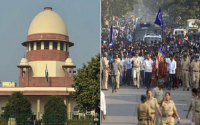
Bhima-Koregaon violence case LIVE updates: Supreme Court resumes hearing on arrest of 5 rights activists

Ryan school murder: Accused official asks SC to shift trial to Delhi

Delhi rape case death penalty verdict ‘misguided and naive’
About Author
