$100 Website Offer
Get your personal website + domain for just $100.
Limited Time Offer!
Claim Your Website NowTop 20 Indian Legal Developments — 2026-May-29
Your daily briefing on the most important Indian legal developments for 2026-May-29. This digest covers Supreme Court judgements, High Court rulings, new legislation, and key legal news — compiled from trusted sources across India.
Criminal Law
1. Supreme Court Rules FIR Delay Cannot Alone Justify Bail in Dowry Death Cases
The Supreme Court in Mahesh Chand v. State of U.P. cancelled bail granted in a dowry death case, reaffirming that delay in filing FIR is insufficient as a standalone ground for bail. The ruling reinforces that courts must apply stricter scrutiny in such cases balancing procedural delays against gravity of allegations.
Why it matters: This precedent strengthens protections for dowry death victims by preventing accused persons from obtaining bail merely on procedural technicalities, reinforcing women’s safety jurisprudence in Indian criminal law.
Source:
Supreme Court of India
· 29 May 2026, 12:30 PM IST
·
Read full text →
Constitutional Law
2. Supreme Court Overhauls SCBA Governance with Gender and Disability Reservations
The Supreme Court issued a landmark directive reforming the Supreme Court Bar Association’s electoral structure under Chief Justice Surya Kant’s bench. The overhaul extends term limits to two years and introduces historic gender and disability reservations for representational equity.
Why it matters: This constitutional restructuring fundamentally democratizes India’s premier legal body, ensuring greater inclusivity and representation among lawyers, setting precedent for institutional modernization across judicial hierarchies.
Source:
Supreme Court of India
· 29 May 2026, 02:07 PM IST
·
Read full text →
Constitutional Law
3. Supreme Court Extends TET Deadline for In-Service Teachers to August 2028
The Supreme Court dismissed batch review petitions challenging the mandatory Teacher Eligibility Test requirement for in-service teachers but exercised extraordinary powers under Article 142 to extend the qualification deadline to August 31, 2028. The decision balances constitutional compliance with practical relief for affected educators.
Why it matters: This ruling affects lakhs of in-service teachers nationwide, clarifying the apex court’s Article 142 powers while providing operational flexibility for educational compliance, impacting both teacher employment security and educational standards.
Source:
Supreme Court of India
· 29 May 2026, 04:15 PM IST
·
Read full text →
High Court
4. J&K High Court: Constitutional Courts Can Intervene in Delayed UAPA Trials
The J&K and Ladakh High Court held that constitutional protections under Article 21 cannot be subordinated to UAPA allegations, and that the day-to-day trial mandate under NIA Act Section 19 prevents prosecutions from lingering indefinitely. The court directed expeditious conclusion of UAPA proceedings.
Why it matters: This judgment establishes critical precedent balancing national security imperatives with fundamental due process rights, ensuring that terrorism prosecutions do not become mechanisms for indefinite detention without trial closure.
Source:
High Court of J&K and Ladakh
· 29 May 2026, 08:30 AM IST
·
Read full text →
Supreme Court
5. Supreme Court Mandates 3-Month Judgment Deadline for High Courts
⚠ Low confidence: Limited source text was available. Please verify via the original source link.
The Supreme Court established a binding three-month deadline for High Courts to pronounce judgments after orders are reserved. The directive also requires bail orders be pronounced ideally the next day and communicated to custodial authorities simultaneously.
Why it matters: This deadline addresses India’s severe case pendency crisis, strengthening access to justice by preventing prolonged judgment delays that compound parties’ hardship and undermine rule of law efficacy.
Source:
Supreme Court of India
· 29 May 2026, 08:12 PM IST
·
Read full text →
Corporate Law
6. Supreme Court Sets Aside ₹447 Crore Disgorgement Order Against Reliance Industries
The Supreme Court partially allowed Reliance Industries’ appeal and set aside a ₹447.27 crore disgorgement order stemming from a 2007 share trading dispute. The judgment clarified evidentiary standards for establishing fraudulent intent in securities market violations.
Why it matters: This ruling provides important clarity on the burden and standard of proof required for disgorgement orders in corporate securities litigation, affecting enforcement of market regulations and investor protection mechanisms.
Source:
Supreme Court of India
· 29 May 2026, 11:16 AM IST
·
Read full text →
Criminal Law
7. Supreme Court Issues Comprehensive Guidelines for Human Trafficking Survivors
⚠ Low confidence: Limited source text was available. Please verify via the original source link.
The Supreme Court issued protective guidelines addressing the lack of legal mechanisms for trafficking survivors, particularly young girls exploited in prostitution. The directive addresses a petition filed by NGO Prajwala in 2004, establishing a national protective framework.
Why it matters: This ruling creates enforceable guidelines for survivor protection, remedying decades-old legislative gaps and establishing court-mandated safeguards that affect vulnerable populations’ access to dignity and rehabilitation support.
Source:
Supreme Court of India
· 29 May 2026, 08:28 PM IST
·
Read full text →
Regulatory
8. Rajasthan HC Takes Suo Motu Action on After-Hours Liquor Sales in Jodhpur
The Rajasthan High Court initiated suo motu proceedings based on an investigative report documenting after-hours liquor sales through concealed openings despite statutory closing hours. The court issued interim directions to enforce compliance with regulatory timings.
Why it matters: This judicial intervention establishes precedent for court-initiated enforcement of regulatory violations, demonstrating judicial proactivity in public health protection and strengthening constitutional remedy mechanisms beyond traditional litigation.
Source:
High Court of Rajasthan
· 29 May 2026, 11:30 AM IST
·
Read full text →
Regulatory
9. Delhi HC Upholds TRAI Cap on Television Advertisements at 12 Minutes Per Hour
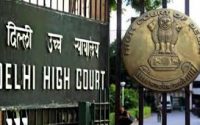
The Delhi High Court upheld TRAI regulations limiting television advertisements to 12 minutes per hour, rejecting broadcasters’ arguments for unfettered commercial exploitation. The court affirmed consumers’ constitutional right to fair and reasonable viewing experience.
Why it matters: This judgment establishes that consumer protection rights override broadcasters’ commercial interests, setting precedent that spectrum regulation includes viewer welfare mandates affecting media regulation across Indian broadcasting.
Source:
High Court of Delhi
· 29 May 2026, 08:09 PM IST
·
Read full text →
Constitutional Law
10. Delhi HC Rejects AAP Deregistration, Clarifies Political Party Protection Standards
The Delhi High Court dismissed a plea to deregister the Aam Aadmi Party, holding that observations made in separate criminal revision petitions cannot constitute grounds for political party deregistration. The court narrowed the scope of Section 29-A, Representation of the People Act 1951.
Why it matters: This ruling protects political parties from arbitrary deregistration through collateral judicial observations, clarifying constitutional safeguards for democratic participation and establishing high standards for party dissolution.
Source:
High Court of Delhi
· 29 May 2026, 11:00 AM IST
·
Read full text →
Corporate Law
11. Delhi HC Stays ROC Penalty Orders Against LinkedIn India in SBO Dispute
The Delhi High Court granted interim relief to LinkedIn India and its directors by staying Registrar of Companies penalty orders for alleged non-compliance with Significant Beneficial Owner disclosure requirements under Companies Act 2013. The stay protects corporate defendants pending substantive adjudication.
Why it matters: This order balances regulatory compliance obligations with corporate relief principles, clarifying the standards for SBO disclosure enforcement and providing procedural safeguards against precipitate regulatory action.
Source:
High Court of Delhi
· 29 May 2026, 10:30 AM IST
·
Read full text →
Property Law
12. Allahabad HC: Private Temple Worship Alone Cannot Create Public Trust Status
The Allahabad High Court (Lucknow Bench) dismissed appeals challenging the private trust status of the Shri Ram Laxman Janki Ji Virajman Mandir in Sitapur. The court held that temples constructed in private residential premises under founder family control cannot become public trusts merely through public worship.
Why it matters: This judgment clarifies trust law fundamentals, distinguishing between private religious structures with public access and true public trusts, affecting property rights and religious institution governance across India.
Source:
High Court of Allahabad (Lucknow Bench)
· 29 May 2026, 12:01 PM IST
·
Read full text →
Supreme Court
13. Supreme Court Criticizes NTA’s Ad-Hocism Following NEET Paper Leak Crisis
The Supreme Court expressed grave concern that the NEET examination paper leak traumatized entire families and highlighted systemic ad-hocism in the National Test Agency’s governance. The NTA filed an affidavit detailing corrective measures adopted following the breach.
Why it matters: This judicial scrutiny holds the testing authority accountable for institutional lapses affecting millions of aspirants, establishing precedent that examination integrity breaches warrant immediate systemic reforms and governance accountability.
Source:
Supreme Court of India
· 29 May 2026, 07:17 PM IST
·
Read full text →
High Court
14. Centre Appoints Three Judges to Karnataka High Court Bench
The Central Government notified the appointment of three judicial officers as Additional Judges of the Karnataka High Court. The elevation strengthens the High Court’s judicial capacity and continues routine judicial administration advancement.
Why it matters: These judicial appointments enhance the Karnataka High Court’s disposal capacity, addressing docket pressures and improving case resolution timelines for litigants across the jurisdiction.
Source:
Ministry of Law and Justice (Government of India)
· 29 May 2026, 03:56 PM IST
·
Read full text →
High Court
15. कर्नाटक हाई कोर्ट के लिए तीन न्यायिक अधिकारियों की अपर जज के रूप में नियुक्ति
केंद्र सरकार ने तीन न्यायिक अधिकारियों को कर्नाटक हाई कोर्ट के अपर जजों के रूप में पदोन्नत किया है। यह नियुक्ति उच्च न्यायालय की पीठ को शक्तिशाली करती है और कर्नाटक न्यायिक सेवा में अनुभवी सदस्यों के उत्थान को दर्शाती है।
Why it matters: ये नियुक्तियाँ कर्नाटक हाई कोर्ट की मामलों के निपटान क्षमता को बढ़ाती हैं, जिससे अधिकार क्षेत्र में मुकदमेबाजी की गति में सुधार होता है।
Source:
Ministry of Law and Justice (Government of India)
· 29 May 2026, 04:01 PM IST
·
Read full text →
Constitutional Law
16. सुप्रीम कोर्ट ने इन-सर्विस शिक्षकों के लिए टीईटी समयसीमा 31 अगस्त 2028 तक बढ़ाई
सुप्रीम कोर्ट ने इन-सर्विस शिक्षकों के लिए अनिवार्य टीईटी योग्यता के विरुद्ध समीक्षा याचिकाओं के बड़े बैच को खारिज कर दिया परंतु व्यापक लोकहित को ध्यान में रखते हुए समयसीमा को 31 अगस्त 2028 तक बढ़ाया। न्यायालय ने शिक्षकों को महत्वपूर्ण राहत प्रदान की।
Why it matters: यह निर्णय लाखों इन-सर्विस शिक्षकों को संवैधानिक अनुपालन के साथ व्यावहारिक कठिनाइयों के बीच संतुलन प्रदान करता है, शिक्षा प्रशासन और शिक्षक कल्याण दोनों को प्रभावित करता है।
Source:
Supreme Court of India
· 29 May 2026, 04:19 PM IST
·
Read full text →
Regulatory
17. CDSCO Clarifies: Cosmetics Are Not Medicines; Injectable Use Prohibited
The Central Drugs Standards Control Organisation issued regulatory clarification affirming that cosmetics are not medicines, are restricted to external use only, and cannot be injected. The notice reestablishes regulatory boundaries between cosmetic and pharmaceutical products.
Why it matters: This regulatory clarification protects consumers from harmful injectables marketed as cosmetics, establishing clear compliance standards affecting pharmaceutical and cosmetics industry operations nationwide.
Source:
Central Drugs Standards Control Organisation (CDSCO)
· 29 May 2026, 10:00 AM IST
·
Read full text →
Corporate Law
18. NCLT and NCLAT Bar Association Marks Decade-Long Milestone
The NCLT and NCLAT Bar Association will commemorate its 10-year anniversary with a stakeholder conference bringing together judges, policymakers, insolvency professionals, and advocates. The event reflects on transformative developments in corporate adjudication and insolvency jurisprudence.
Why it matters: This milestone celebration documents the evolution of India’s corporate tribunal system, providing opportunity to assess effectiveness of specialized adjudication mechanisms affecting business law practice and insolvency resolution.
Source:
NCLT and NCLAT Bar Association
· 29 May 2026, 09:30 AM IST
·
Read full text →
Legal News
19. UK High Court Warns on AI Hallucinations in Legal Practice
The UK High Court cautioned that artificial intelligence, while potentially assistive, remains unreliable and cannot substitute for proper legal research and professional judgment, particularly for junior practitioners. The ruling emphasized solicitors’ duty to verify information before court submissions.
Why it matters: This cautionary precedent provides relevant guidance for Indian legal practitioners adopting AI tools, establishing professional accountability standards and warning against overreliance on AI-generated content without independent verification.
Source:
High Court of the United Kingdom
· 29 May 2026, 07:30 AM IST
·
Read full text →
Supreme Court
20. NEET Leak: Supreme Court Stresses Accountability; PM Supervising Response
⚠ Low confidence: Limited source text was available. Please verify via the original source link.
The Supreme Court emphasized institutional accountability in the NEET examination paper leak investigation while the Government reported Prime Minister-level personal supervision of the situation. The matter addresses systemic integrity concerns affecting millions of entrance examination aspirants.
Why it matters: This high-level engagement addresses examination system credibility, establishing that national entrance examination security breaches warrant executive accountability and judicial oversight, affecting public confidence in educational access mechanisms.
Source:
Supreme Court of India / Government of India
· 29 May 2026, 10:09 AM IST
·
Read full text →
📌 Disclaimer: This digest is compiled automatically from publicly available sources including court websites, legal news publications, and government portals. It is for informational and reference purposes only and does not constitute legal advice. Please refer to the original source for the authoritative text of any order, judgment, or notification. WakilSahab is not responsible for any errors or omissions.
Need a Lawyer? WakilSahab connects you with qualified advocates across India.
Delhi High Court rejects AAP MP’s plea against Modi ‘absenteeism’

Supreme Court to examine if perks for ex-lawmakers are justified

No ground to erase death penalty in Indian law: Supreme Court
About Author
